Stefan Stefanov

If you are a parent wondering when your child should pick up a racquet, you are not alone. Choosing the right time to start tennis for kids depends on motor skills, attention span, and your child's own curiosity about the game.
In short, ages 5 to 7 tend to be the sweet spot for starting structured tennis lessons for kids. At that stage, most children have enough coordination to hold a racquet, track a ball, and follow basic instructions. Some may be ready a bit earlier, while others do better waiting until age 8 or beyond.
Here you will find what to expect at each age, how youth programs work, and what equipment your child needs.
What Is the Best Age to Start Tennis?

Every child develops differently, so no single age works for everyone. A good way to think about readiness is by looking at age ranges rather than one number.
Ages 3 to 4: Early Exposure Through Play
Children at 3 or 4 are usually too young for formal instruction. Most kids at that age do not yet have the coordination or attention span to follow structured drills. Parents can still introduce the sport through play:
Roll or toss a tennis ball back and forth in the backyard
Let your child hold a lightweight foam racquet and tap a balloon
Focus on general movement, balance, and catching games
The goal is not technique. You are simply building body awareness and making the idea of hitting a ball feel fun.
Ages 5 to 7: The Sweet Spot for Most Beginners
The best age to start tennis for most children falls in the 5 to 7 range. Around age 5 or 6, children tend to develop the hand-eye coordination needed to make contact with a ball, and most kids at this age have the focus to listen to a coach for 30 to 60 minutes.
The United States Tennis Association (USTA) sets age 5 as the minimum for its competitive youth programs and recommends red ball play for ages 5 to 7. Red balls are low-compression balls that bounce lower and travel slower than standard tennis balls. Courts are also smaller (36 feet long instead of 78 feet), so young players can sustain rallies from day one.
Lessons at this stage typically focus on basic grip, simple forehand and backhand swings, court movement, and fun games rather than formal scorekeeping. And if you are worried about timing, a child who starts at 5 does not necessarily have an advantage over one who starts at 7.

Ages 8 to 10: Building Real Skills
Once kids reach 8 or older, they tend to have stronger coordination and a better understanding of rules. Formal kids tennis lessons at this age usually cover proper stroke mechanics, footwork patterns, and introductory match play.
The USTA's orange ball programs (typically for ages 7 to 10) use a 60-foot court and a slightly faster ball than the red. Children in this range often play their first casual matches or join local team tennis.
Ages 11 and Up: Still a Great Time to Start
Even beyond age 10, children and teens can start tennis and make solid progress. A child who begins at 11 or 12 may pick up concepts faster thanks to better focus and physical maturity. The USTA offers programs for players of all ages through its Net Generation pathway, spanning ages 5 to 18.
Guides like this one can help you pick the right time, but once your child does step on the court, you will want a way to capture their progress from the very first lesson. Spintip records your child's match, tracks a performance number on every point, and connects you with certified coaches who can review real play and give feedback on what your child actually needs to work on.
Download Spintip for free and be ready for that first session.
Signs Your Child May Be Ready for Tennis Lessons
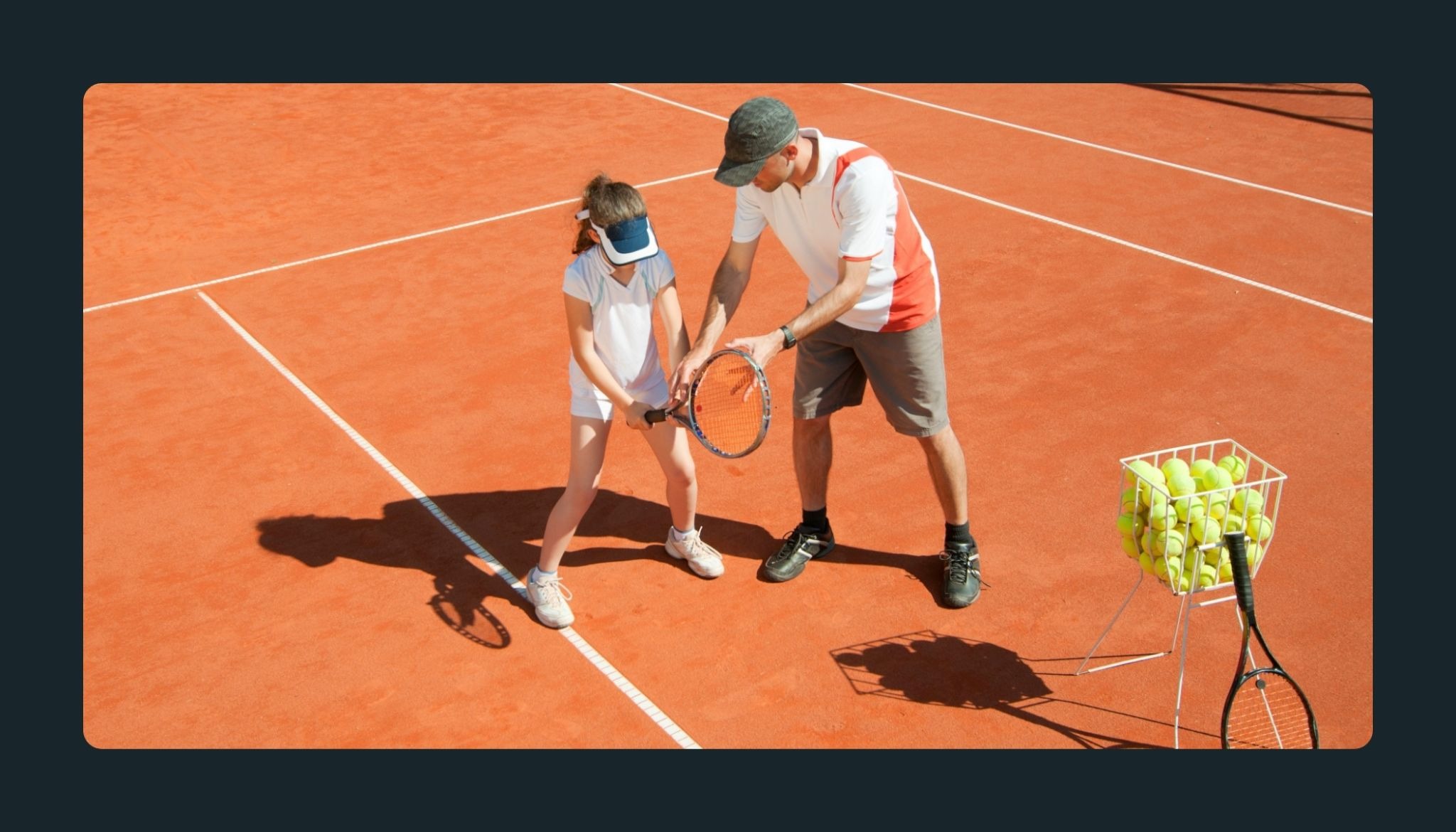
Age provides a rough guideline, but readiness matters more. Here are signs your child could handle a beginner program:
Can catch and throw a ball: Basic catching shows that hand-eye coordination is developing.
Can follow two-step instructions: A coach might say, "Hold the racquet like this and swing forward."
Shows interest in hitting or chasing balls: A curious child learns faster than one who feels pushed.
Can focus for 20 to 30 minutes: A half-hour of attention is enough for a starter lesson.
Comfortable in a group setting: Most beginner programs are group lessons.
If your child checks a few of these boxes, a trial lesson will tell you the rest.
How the USTA Progressive Ball System Works
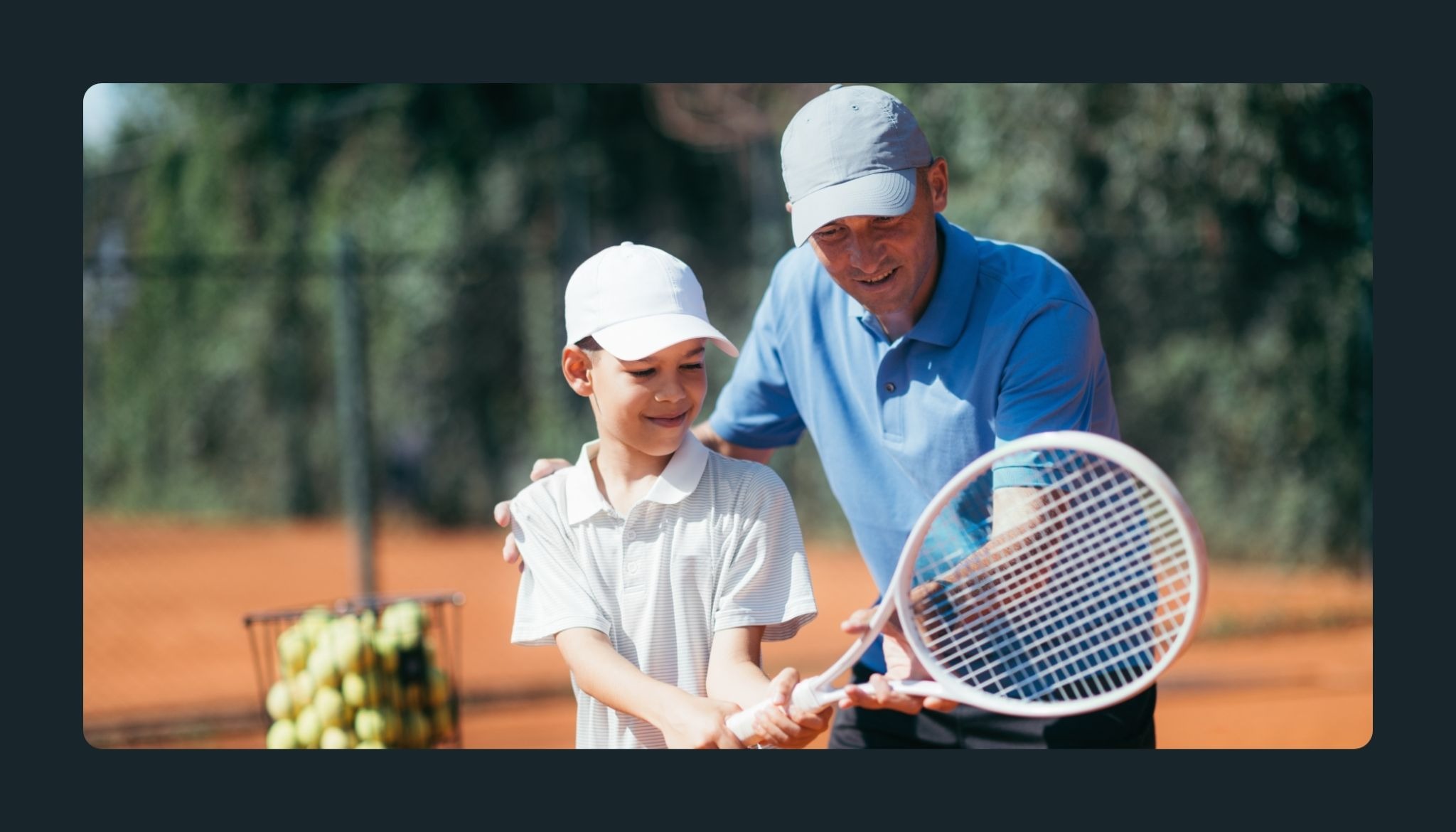
One of the best parts of youth tennis in the United States is the progressive ball system. Rather than handing a young child the same hard yellow ball that adults use, the USTA's approach matches equipment to a child's size and skill level.
Red Ball (Ages 5 to 8)
Red balls are 75% slower than standard and are used on 36-foot courts with lower nets. Racquets at this stage are typically 19 to 23 inches long, and programs focus on coordination, movement, and fun above all else.
Orange Ball (Ages 7 to 10)
Orange balls are about 50% slower and are played on a 60-foot court with racquets usually 23 to 25 inches long. Children begin learning proper grips, consistent strokes, and longer rallies.
Green Ball (Ages 9 to 12)
Green balls are 25% slower than standard and are used on a full 78-foot court with racquets from 25 to 26 inches. Children at this level work on serving, shot placement, and match play.
After the green ball stage (or turning 11), players transition to standard yellow balls and full-size equipment.
Choosing the Right Equipment for Young Players
Getting the right gear does not need to be expensive, but proper sizing makes a real difference in how quickly your child improves.
Racquet Sizing by Height
Racquet length should be based on your child's height, not their age. Here is a general guide:
Under 3'3" (100 cm): 17 to 19 inch racquet
3'3" to 3'9" (100 to 115 cm): 21-inch racquet
3'9" to 4'5" (115 to 135 cm): 23-inch racquet
4'5" to 4'11" (135 to 150 cm): 25-inch racquet
Over 4'11" (150 cm): 26-inch racquet
A simple way to check fit is to have your child stand upright, hold the racquet at their side, and let the head point toward the ground. The racquet head should hover just above the floor. When in doubt between sizes, go with the smaller option.
Shoes and Clothing
Tennis shoes with lateral support matter more than you might expect. Running shoes are designed for forward movement, while tennis requires side-to-side action. Many courts also require non-marking soles. Comfortable, breathable clothing works fine for beginners.
Benefits of Starting Tennis at a Young Age
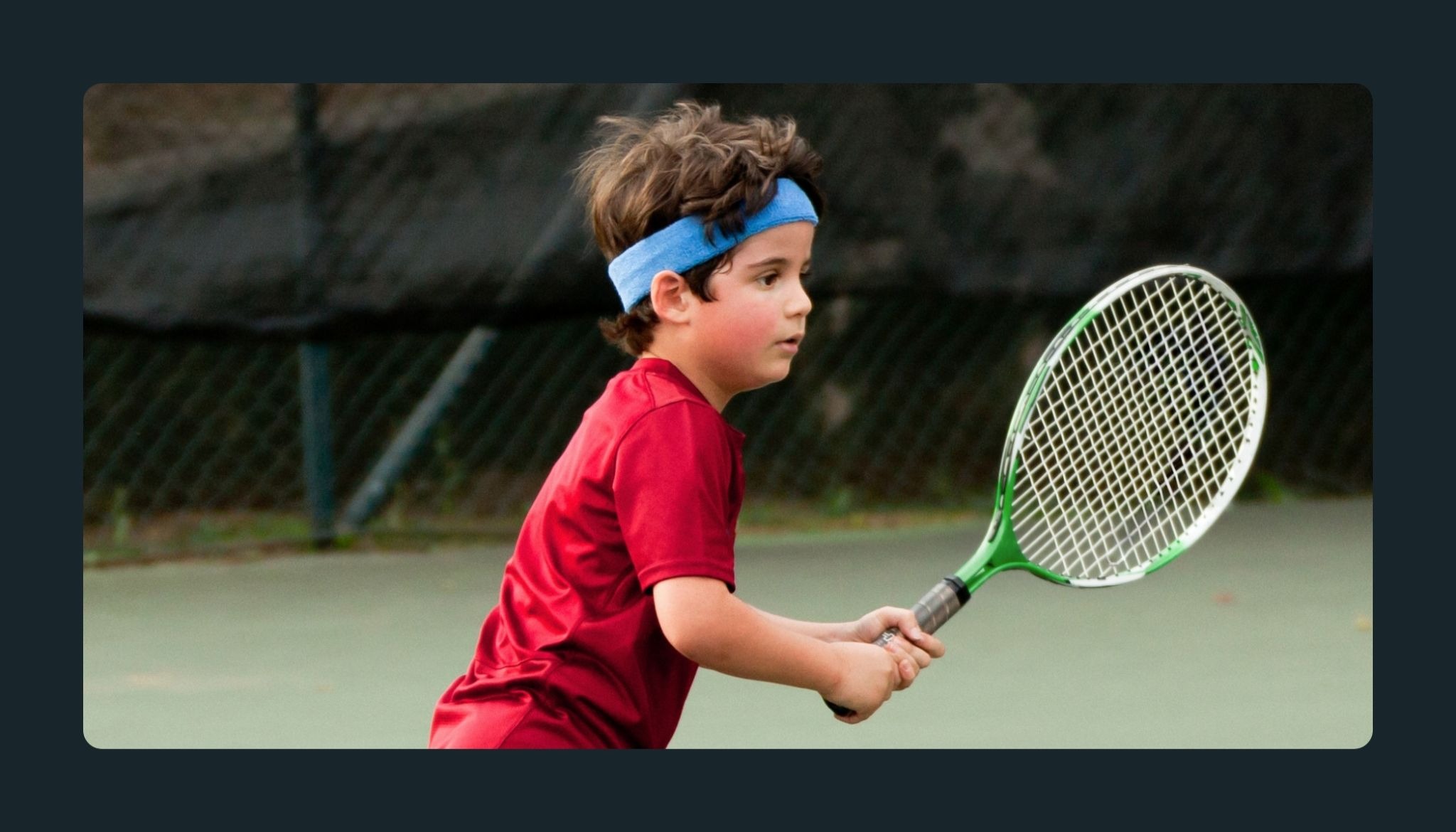
Tennis offers benefits that may support your child's development beyond the court.
Physical benefits may include:
Improved hand-eye coordination and motor skills
Better balance, agility, and fitness
Stronger cardiovascular health
Mental and social benefits may include:
Sharper focus from tracking a moving ball
Learning to handle winning and losing with grace
Building discipline through repeated practice
Meeting new friends through group lessons
On top of all that, tennis is often called a "lifetime sport" because people can play well into their 70s.
Tips for Parents of Young Tennis Players
Supporting your child's tennis journey does not require you to become a coach. Here are practical ways to help.
Prioritize fun over performance: Ask "Did you have fun?" after every lesson.
Avoid becoming a sideline coach; Let the instructor handle the teaching.
Keep practice balanced: One or two sessions per week are typically enough for a beginner.
Be patient with progress: Plateaus are normal. Encouragement helps kids stick with the game.
Consider a trial lesson first: Many clubs offer free or low-cost introductory sessions.
Conclusion
Choosing when to start your child in tennis comes down to matching the activity to their development. Most kids do well beginning between ages 5 and 7, but children who start later can thrive with good coaching.
As your child grows in the sport, Spintip can help parents and young players get more from every session. Place a phone behind the baseline, tap start, and Spintip's AI automatically calibrates the court and records the match with no setup required.
After play, VIEWPOINT lets you swipe through every point with dead space removed, making a 90-minute junior match reviewable in minutes. PULSE tracks a performance number point by point, so you can watch your child's progress across a full season. When a specific moment needs a coach's eye, ANALYZE lets you pick any point, record a question, and send the clip to a certified coach for personalized feedback.
SAGE, the continuously improving AI coach, also delivers action items after each session to guide practice between lessons.
Download Spintip free and capture your child's next match.
Sources:
What is the best age to start tennis for kids?
Can a 3 or 4-year-old play tennis?
Is 10 too old to start tennis?
How do I choose the right racquet size for my child?
What are red, orange, and green tennis balls?


