Stefan Stefanov

You have been rallying for five straight points. Deep forehands, heavy backhands, both players grinding from the baseline. Your opponent settles into a rhythm, expecting one more big ball. Instead, you feather a soft shot that barely clears the net and dies a foot inside the service box. Your opponent lunges but never gets close.
That is a drop shot done right.
A drop shot in tennis uses a continental grip, a short backswing, an open racquet face, and a soft forward-and-under swing to land the ball just over the net with backspin. Disguise, timing, and positioning make the difference between a winner and an easy ball for the other player.
Most recreational players skip the shot because they see it as risky or "too advanced." Learning how to hit a drop shot in tennis does not require elite talent. Once the fundamentals click, the drop shot becomes one of the best ways to add variety to your match play and keep opponents guessing.
Here is how to build the shot, along with strategy tips and common mistakes to watch for.
Key Takeaways
Use a continental grip and a short, compact backswing to control the shot.
Swing forward and under the ball with soft hands to create backspin.
Aim slightly higher over the net, not lower. Think "mountain," not flat line.
Disguise the drop shot by preparing the same way you would for a regular groundstroke.
Use the shot when your opponent camps behind the baseline or after several deep, powerful rallies.
Avoid the shot when you are out of position, off balance, or have already used the shot too many times in the match.
What Is a Drop Shot in Tennis?
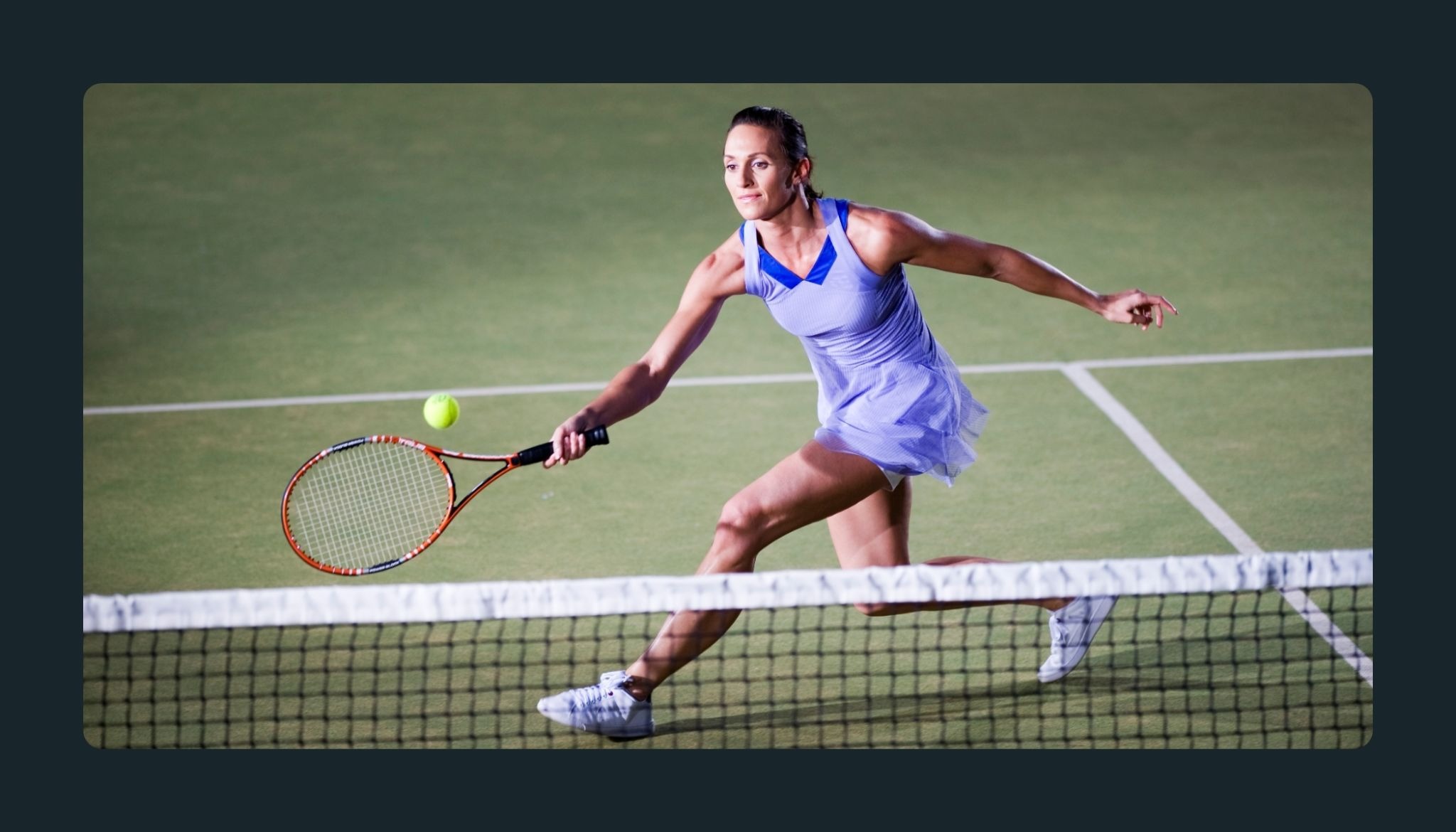
A drop shot is a soft, controlled shot that clears the net by a small margin and lands short in the opponent's service box. Good drop shots carry enough backspin to keep the second bounce low, making the ball very difficult to run down.
Unlike a regular groundstroke, the drop shot relies on touch, placement, and surprise. The shot works off the forehand or backhand side, though many players find the backhand easier because the continental grip is closer to a standard backhand grip. Forehand drop shots often require a larger grip change and more wrist control.
Beyond that, court surface can affect how well the shot works. Drop shots tend to work best on clay, where the ball grips the surface and stays low. On hard courts, the ball may skid and bounce higher, giving the opponent more time.
Practicing your drop shot? Spintip records your entire session with one tap, removes dead space, and lets you swipe through every point in VIEWPOINT. See exactly where your drop shots land, save your best winners as clips, and track your progress with PULSE. Try Spintip for free.
Step-by-Step Drop Shot Technique

Solid execution comes down to a few fundamentals. Here are six steps to build a reliable drop shot.
Step 1: Use the Continental Grip
The continental grip is the standard grip for drop shots, volleys, slices, and serves. According to the USTA and the ITF, the continental grip places the base knuckle of your index finger on bevel 2 of the racquet handle.
A simple way to find the grip:
Hold the racquet out in front of you with the edge pointing down, like a hammer.
Wrap your hand around the handle so the V between your thumb and index finger sits on top.
Your palm should rest on the narrow edge, not on the flat face.
Once you have the grip, the next focus is controlling how far you take the racquet back.
Step 2: Shorten Your Backswing
A full backswing generates power, and power is the opposite of what you want here. Keep your backswing short and compact, almost like a volley preparation. A short take-back gives you:
Better control of ball speed
More feel and touch at contact
A quicker, less obvious motion that helps disguise the shot
Step 3: Open the Racquet Face and Swing Under the Ball
Let the racquet face tilt slightly open. At contact, your racquet should move under and slightly across the ball, forward and upward rather than downward. A common coaching cue is to "brush under the ball," sweeping underneath with a slightly open face. That brushing motion creates backspin, and backspin does two important things:
Slows the ball after the bounce
Keeps the bounce low and short
Step 4: Keep Your Hands Soft at Contact
Soft hands often separate a good drop shot from a bad one. Gripping too tightly tends to send the ball deep. Loosening your grip at contact can absorb pace and give you the touch the shot requires.
Step 5: Aim Up Over the Net, Not Down
Many players hit the drop shot too low, which increases the risk of netting the ball. A slightly higher arc gives the ball room to clear the net and drop sharply. Think of the trajectory as a small "mountain," where the ball climbs briefly, clears with margin, and drops steeply. Aim to land the ball within a few feet of the net.
Step 6: Disguise the Shot
Surprise is what tends to make a drop shot effective. Players who telegraph the shot give their opponent a head start.
A few ways to disguise your drop shot:
Set up the same way you would for a regular groundstroke. Same stance, same shoulder turn.
Switch from your topspin grip to the continental grip at the last moment.
Keep your eyes on the ball instead of looking at the target.
Professional players like Novak Djokovic, Carlos Alcaraz, and Nick Kyrgios are known for disguising drop shots behind a full swing motion. Alcaraz often hides the shot so well that opponents cannot tell the shot apart from his regular forehand until after contact.
When to Use a Drop Shot
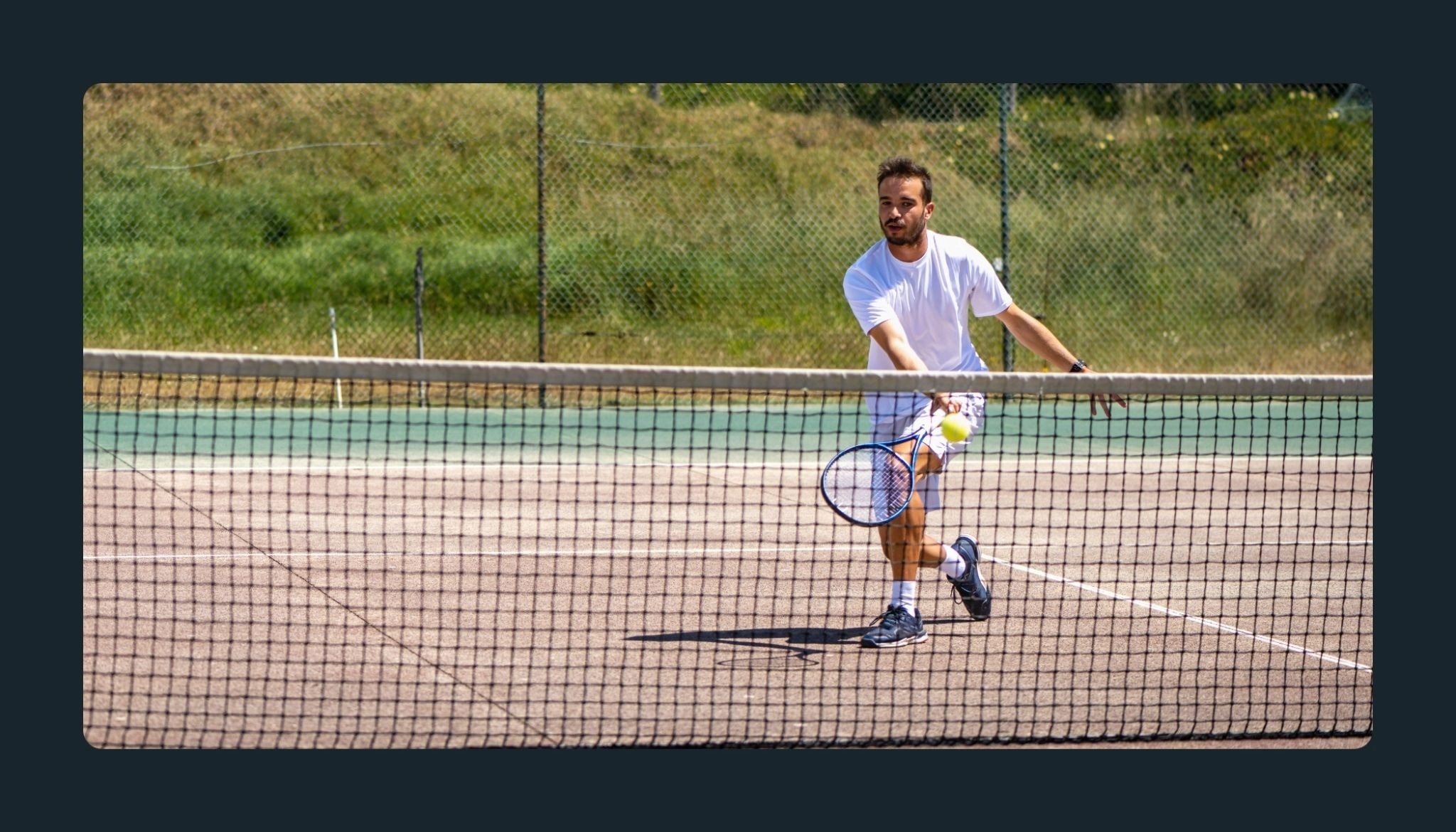
Your Opponent Is Behind the Baseline
The farther back your opponent stands, the more court they need to cover. If they camp deep, a drop shot can force them into an uncomfortable forward sprint.
After Several Deep, Powerful Shots
Contrast is a big part of what makes the drop shot work. After two or three deep, hard groundstrokes, suddenly changing pace can catch your opponent leaning backward. The more rhythm you build, the more effective the change of pace.
When Your Opponent Struggles at the Net
Some players are more comfortable at the baseline than at the net. A drop shot forces them forward to hit a shot they rarely practice, often setting up an easy next-ball opportunity.
As an Approach Shot
Hitting a drop shot and following it to the net can be a smart combination. Responses to a drop shot tend to be soft or short, which may put you in a strong position to volley.
When Not to Use a Drop Shot
You are behind the baseline or out of position. The ball travels too far.
Your opponent is already inside the court. The shot works only when the opponent has ground to cover.
You have used the shot several times. Overusing the drop shot makes the shot predictable.
You are off balance or rushed. Good drop shots require balance and controlled hands.
Common Drop Shot Mistakes to Avoid
Gripping too tightly. A tight grip sends the ball too deep.
Taking a full backswing. A large backswing adds pace. Keep the motion compact.
Hitting too flat. Without backspin, the ball skids through the court.
Aiming too close to the net tape. Give yourself a couple of feet of clearance.
Standing too far back. A drop shot from behind the baseline is low-percentage.
Telegraphing the shot. If your setup looks different from a regular groundstroke, your opponent reads the shot early.
Conclusion
Recording your practice sessions and reviewing your technique can speed up improvement. Spintip makes that simple. Place your phone behind the baseline, tap Start, and go play. The app auto-calibrates the court using on-device computer vision.
After your session, swipe through every point in VIEWPOINT at up to 10x speed, and swipe up on a clean drop shot winner to save the clip.
SAGE, which is continuously improving, delivers a post-game summary with action items, and AI captions are inscribed as subtitles into each point. For deeper feedback, pick any point, record your question through ANALYZE, and send the clip to a certified coach with your question inscribed as a subtitle in the video.
SHARE lets you export a winning drop shot as a ready-to-post clip for Instagram or TikTok.
Download Spintip for free and start reviewing your game today.
What is a drop shot in tennis?
What grip should you use for a drop shot?
What is the difference between a drop shot and a slice?
How do you practice the drop shot?
How do you return a drop shot hit against you?


