Stefan Stefanov

You finish a tough match, legs heavy, shoulder aching. You played well enough to win, but deep down you know your body gave out before your game did. Maybe you lost that last set because your legs couldn't push off for one more wide ball. Maybe your serve lost its pop in the third set. Most players have felt that gap between what their skills can do and what their body will allow.
The right off-court training closes that gap. A focused program helps you move faster, hit with more control, and stay strong through the final point.
Key Takeaways
Lower body and core exercises matter more than upper body for on-court power
A dynamic warm-up before every session may help reduce injury risk
Rotational exercises like medicine ball throws directly support groundstroke power
Shoulder stability work, especially external rotation, can help protect against overuse injuries from serving
Two to three off-court sessions per week is enough for most players to see a difference
Agility drills like lateral shuffles and box jumps train the quick, explosive movements tennis demands
Why Off-Court Training Matters for Tennis

Tennis looks like an upper-body sport, but most of the power behind every stroke starts in the legs and core. According to the USTA's Player Development guidelines, a properly designed strength and conditioning program can help any player perform at a higher level.
A dedicated tennis workout builds the base for better shots, quicker court coverage, and the stamina to stay sharp in the final set.
Sample 3-Day Weekly Plan
A simple way to organize your training is to split the week into focused sessions:
Day 1: Lower body strength (goblet squats, single-leg deadlifts, calf raises) plus core (Pallof press, dead bugs)
Day 2: Upper body stability (band pull-aparts, external rotation, push-ups) plus agility (lateral shuffles, cone drill)
Day 3: Power and conditioning (box jumps, medicine ball throws, jump rope) plus flexibility
Space each session at least one day apart and use rest days for light stretching.
How do you know if your plan is working? Spintip tracks your performance number live during every match, so you can watch your level trend upward week over week as your fitness improves. Download Spintip for free and turn your training plan into on-court proof.
Dynamic Warm-Up
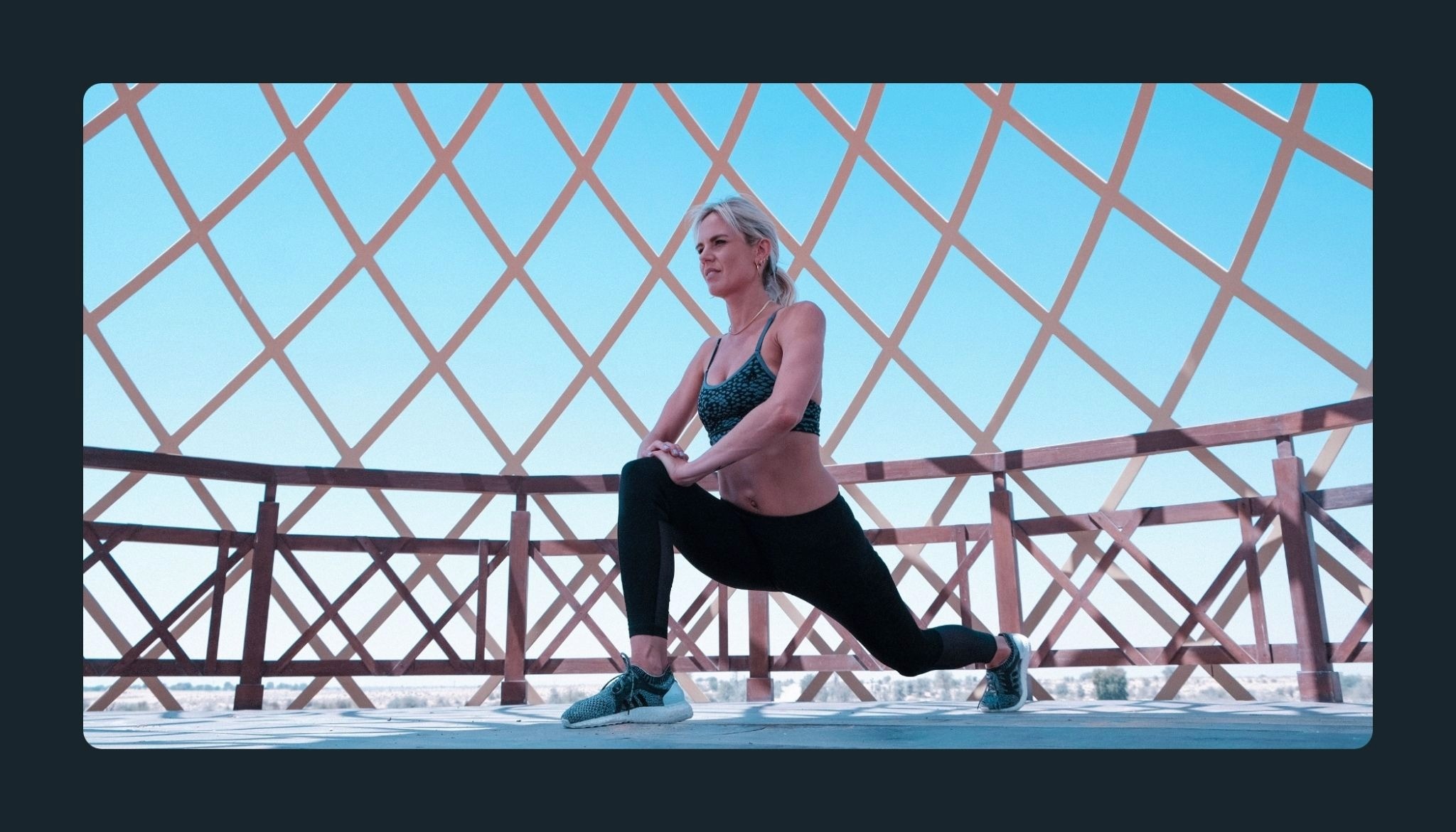
Every training session should start with a dynamic warm-up to raise your heart rate, loosen your joints, and wake up the muscles you're about to use.
Forward Lunges
Stand with feet hip-width apart. Step forward, bending both knees until the front thigh is parallel to the ground. Push back and repeat. Aim for 10 per leg.
Lateral Lunges
Step wide to one side and bend that knee while keeping the opposite leg straight. Push back to center and repeat. Aim for 10 per leg.
Spiderman Crawls
Start in a push-up position. Step one foot forward outside the hand on the same side, then rotate the opposite arm toward the ceiling. Return and repeat. Aim for 8 to 10 per side.
Lower Body Strength

Power on the court comes from the ground up. Strong legs let you push off for wide balls, recover after a deep lunge, and drive force into every stroke.
Goblet Squats
Hold a dumbbell or kettlebell at chest height. Squat until your thighs are parallel to the floor, keeping your chest upright and knees over your toes. Press through your heels to stand. Aim for 3 sets of 10 to 12 repetitions. Goblet squats build quad, glute, and core strength in a pattern that mirrors the ready position between shots.
Single-Leg Romanian Deadlifts
Stand on one foot while holding a dumbbell in the opposite hand. Hinge at the hip, lower the weight toward the floor, and extend the free leg behind you. Return and repeat. Aim for 3 sets of 8 to 10 per leg. Tennis constantly loads one leg at a time, so single-leg deadlifts build the balance and strength you need when reaching for a wide forehand.
Calf Raises
Stand on a flat surface or the edge of a step. Rise onto the balls of your feet, pause, and lower back down. Aim for 3 sets of 15 to 20 repetitions.
Core and Rotational Power

Your core connects the lower and upper body, transferring power from the legs into the racquet arm during forehands, backhands, and serves. Rotational strength matters because nearly every stroke involves twisting through the hips and torso.
Pallof Press
Attach a resistance band to a fixed point at chest height. Stand sideways, hold the band at your chest, and press it straight out. Hold for two to three seconds, then bring your hands back. Aim for 3 sets of 10 per side. The Pallof press trains your core to resist rotation, which may help you stay balanced during stretched-out shots.
Medicine Ball Rotational Throws
Stand sideways to a wall, about three feet away, holding a medicine ball at waist height. Rotate your trunk away from the wall, then explosively twist and throw the ball into the wall. Catch and repeat. Aim for 3 sets of 8 to 10 per side. On court, the same hip-driven rotation powers your forehand and backhand.
Dead Bugs
Lie on your back with arms toward the ceiling and knees bent at 90 degrees. Lower one arm overhead and the opposite leg toward the floor, keeping your lower back flat. Return and repeat. Aim for 3 sets of 10 per side.
Upper Body and Shoulder Stability

Serving and hitting place repetitive stress on the shoulder and elbow. Strengthening the rotator cuff and upper back may help keep overuse injuries from sidelining you.
Band Pull-Aparts
Hold a resistance band at arm's length in front of you. Pull the band apart by squeezing your shoulder blades together until it touches your chest. Return and repeat. Aim for 3 sets of 15 repetitions.
External Rotation with Band
Hold a resistance band with your elbow bent at 90 degrees and tucked against your side. Rotate your forearm outward while keeping your elbow still. Return and repeat. Aim for 3 sets of 12 to 15 per arm. External rotation targets the rotator cuff, which stabilizes the shoulder during the serve toss and overhead smash.
Push-Ups
Start in a plank position with hands slightly wider than shoulder-width. Lower your chest toward the floor, keeping your body straight, then push back up. Aim for 3 sets of 10 to 15 repetitions.
Agility and Speed Drills
Quick footwork and efficient direction changes often decide whether you reach the ball or watch it pass by. Agility drills train your body to react faster, so the strength you've built in the gym shows up during points.
Lateral Shuffle Drill
Set two cones about 10 to 15 feet apart. Start at one cone in an athletic stance, then shuffle sideways to the other. Touch it and shuffle back. Aim for 3 sets of 30 seconds. Lateral shuffles replicate the movement you use to cover the baseline during crosscourt rallies.
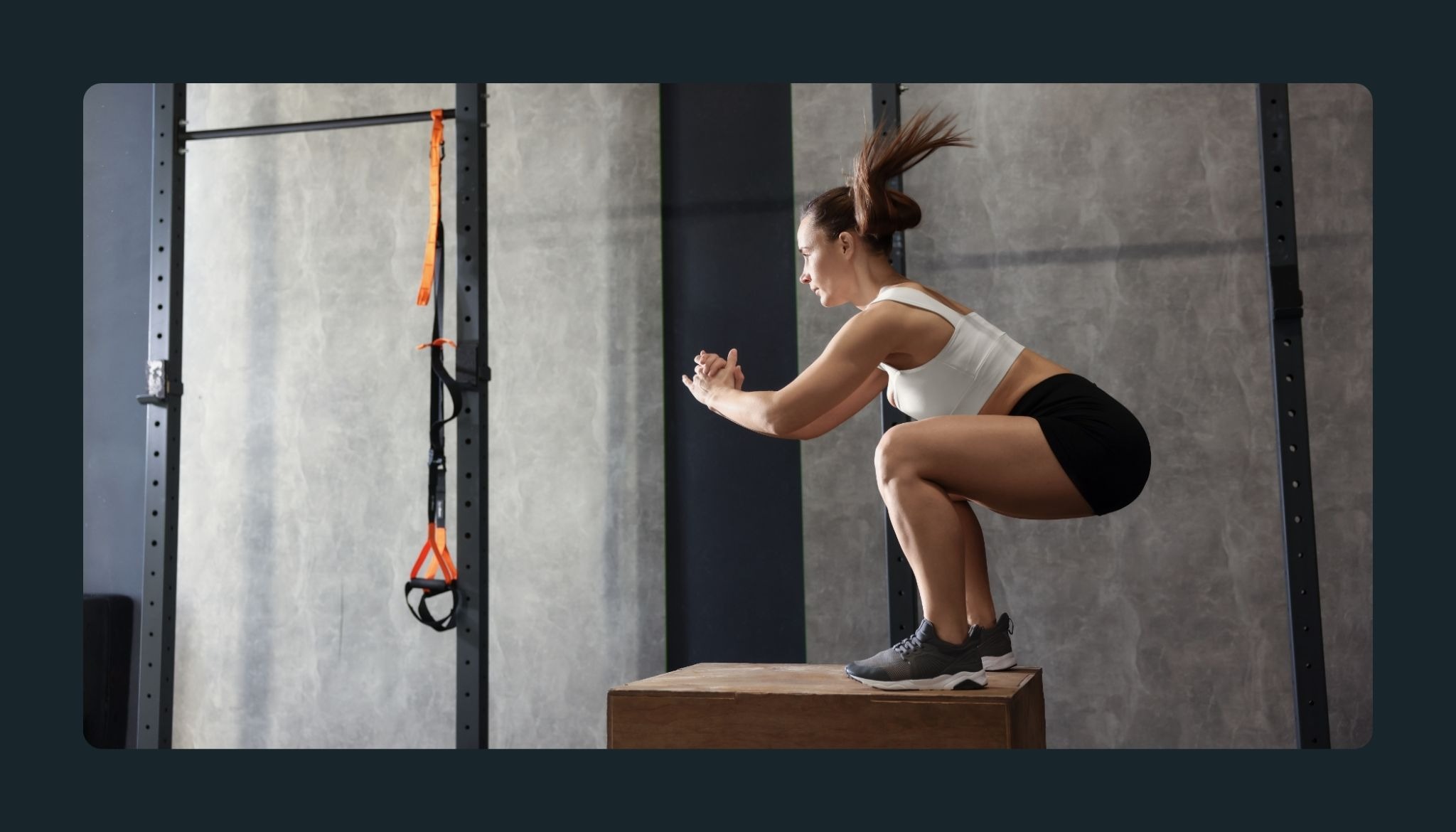
Box Jumps
Stand facing a sturdy box or platform. Swing your arms and jump on, landing softly with both feet. Step down and repeat. Aim for 3 sets of 6 to 8 repetitions. Box jumps develop explosive leg power, which may improve your first step and serve loading.
Sprint-to-Backpedal Drill
Set two cones about 20 feet apart. Sprint to the far cone, touch it, then backpedal to the start. Repeat for 3 sets of 6 repetitions. Running forward and quickly reversing mimics approaching the net and recovering to the baseline.
Jump Rope
Jumping rope builds cardiovascular endurance, foot speed, and coordination. Start with 3 rounds of 60 seconds, resting 30 seconds between rounds. Mixing in single-leg hops and side-to-side jumps adds variety and challenges your on-court agility.
Flexibility and Recovery
Good range of motion in your hips, shoulders, and ankles helps you move freely and may reduce tightness after play. A post-match routine can include:
Hip flexor stretches held for 20 to 30 seconds per side
Hamstring stretches held for 20 to 30 seconds per side
Shoulder cross-body stretches held for 15 to 20 seconds per side
Foam rolling on the quads, calves, and upper back for 5 to 10 minutes
Players who stretch and foam roll consistently tend to stay healthier across a full season than those who skip recovery altogether.
Conclusion
A strong tennis workout combines lower body strength, core stability, rotational power, shoulder resilience, agility, and flexibility. Even two to three sessions per week can lead to real improvements on the court.
The real payoff comes when that off-court work shows up in your matches. Spintip is an AI-powered camera app for tennis and pickleball. Place your phone behind the baseline, press start, and go play. When you finish, your game review is ready instantly with no uploads or cloud processing.
PULSE tracks a live performance number point by point, so you can see whether your fitness is raising your level over time. VIEWPOINT lets you swipe through every point with dead space removed, reviewing a full match in minutes. SAGE, Spintip's continuously improving AI coach, delivers action items after your session, flagging areas like court recovery and footwork that connect directly to the exercises in this guide.
Download Spintip free and start connecting your training to your results.
How many days per week should tennis players train off the court?
Can bodyweight exercises be enough for tennis fitness?
What are the most common injuries in tennis and how can exercise help prevent them?
Should training focus more on upper body or lower body?
How long should a tennis warm-up last?


