Stefan Stefanov

You finish a match, and the same thought comes back: your serve still isn't landing where you want, your backhand keeps drifting long, and you are not sure what to fix first. That gap between wanting to improve and knowing exactly where to start is something almost every player runs into, whether you picked up a racquet last month or ten years ago.
The good news is that learning how to get better at tennis does not require a complete overhaul of your game. Small, focused changes to your technique, movement, fitness, and mindset can produce visible progress in a matter of weeks. According to the USTA's 2026 participation report, 27.3 million Americans played tennis in 2025, and nearly 4.9 million of them were first-time players looking for exactly this kind of direction.
Getting better comes down to eight areas: equipment, reliable strokes, footwork, fitness, structured practice, strategy, mental toughness, and match review. Here is a step-by-step guide covering everything from tennis basics to match strategy.
Step 1: Get the Right Equipment
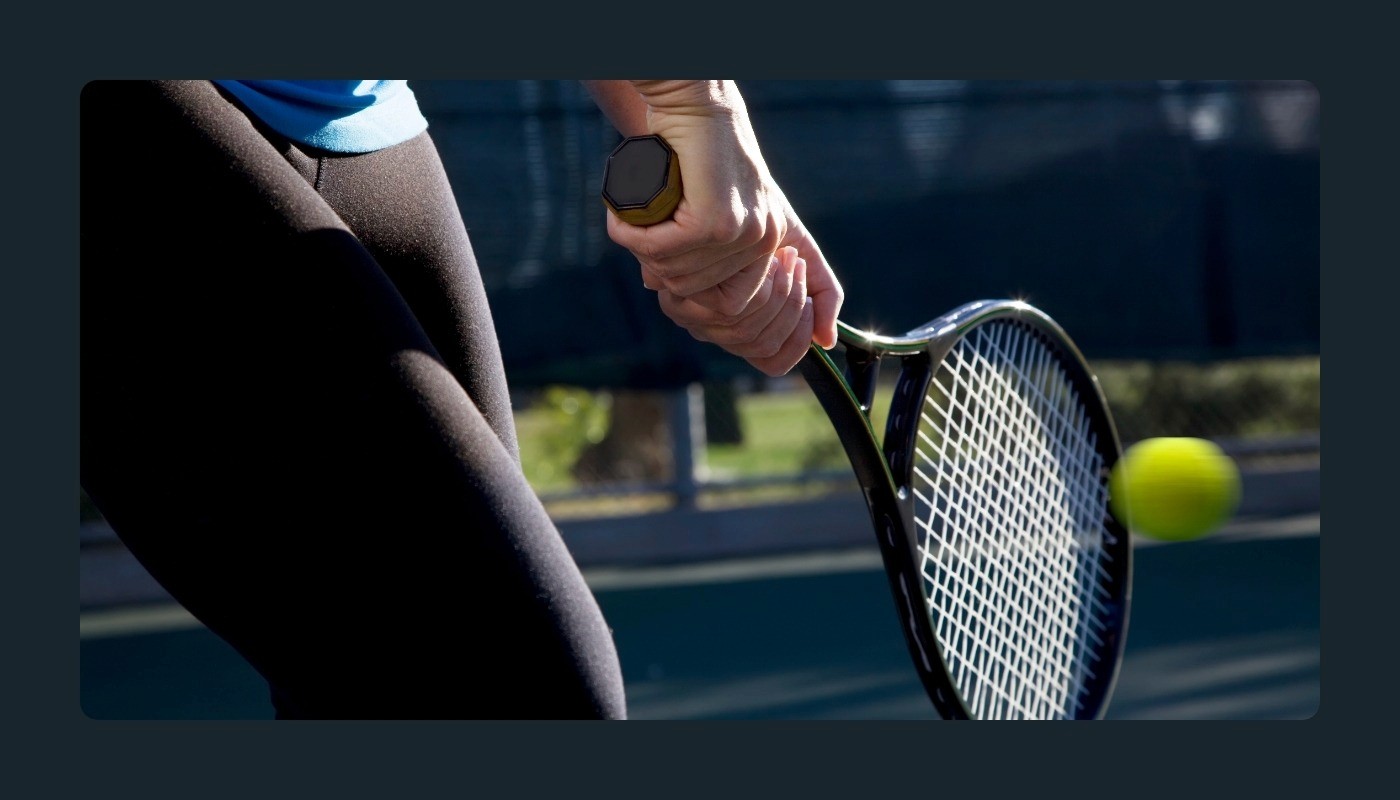
The wrong racquet or shoes can slow your progress, so make sure your gear supports the way you want to play before working on strokes.
Choosing a Racquet
Look for a larger head size (100 to 110 square inches), which provides a bigger sweet spot and tends to be forgiving on off-center hits. Grip size matters too. A grip that is too small or too large can cause wrist strain.
Shoes and Balls
Tennis shoes provide the lateral support that running shoes lack. Beginners may also benefit from low-compression balls that bounce lower and move more slowly.
Step 2: Master the Core Strokes

Learning how to play tennis starts with three shots: the forehand, the backhand, and the serve. Consistency on these forms the backbone of every match.
The Forehand
The forehand is often the stroke you hit most during a match. A few key points to focus on:
Keep your eyes on the ball from the moment your opponent hits it, and turn your shoulders and hips to the side early.
Make contact slightly in front of your body, roughly at hip height.
Follow through fully, letting the racquet finish over your opposite shoulder.
An Eastern grip (base knuckle on bevel three) can help beginners develop clean contact. The USTA's forehand instruction resources recommend keeping grip pressure light. As you progress, brushing up the back of the ball with a low-to-high swing path can add topspin and increase your margin over the net.
The Backhand
The backhand often takes longer to develop. A two-handed grip tends to offer more stability for tennis for beginners, while a one-handed backhand provides reach but requires stronger wrist control. Place your non-dominant hand above your dominant hand and rotate your hips and shoulders together through the swing.
The Serve
The serve is the only shot where you have full control over what happens. Here are a few tennis tips for beginners on the serve:
Use a Continental grip (hold the racquet like a hammer with the edge perpendicular to the ground).
Toss the ball slightly in front of you and to the hitting side, releasing around eye level.
Swing up toward the ball and let the racquet accelerate naturally through contact.
Practicing the toss on its own, aiming for the same height and spot each time, can speed up serve progress.
Step 3: Develop Your Footwork
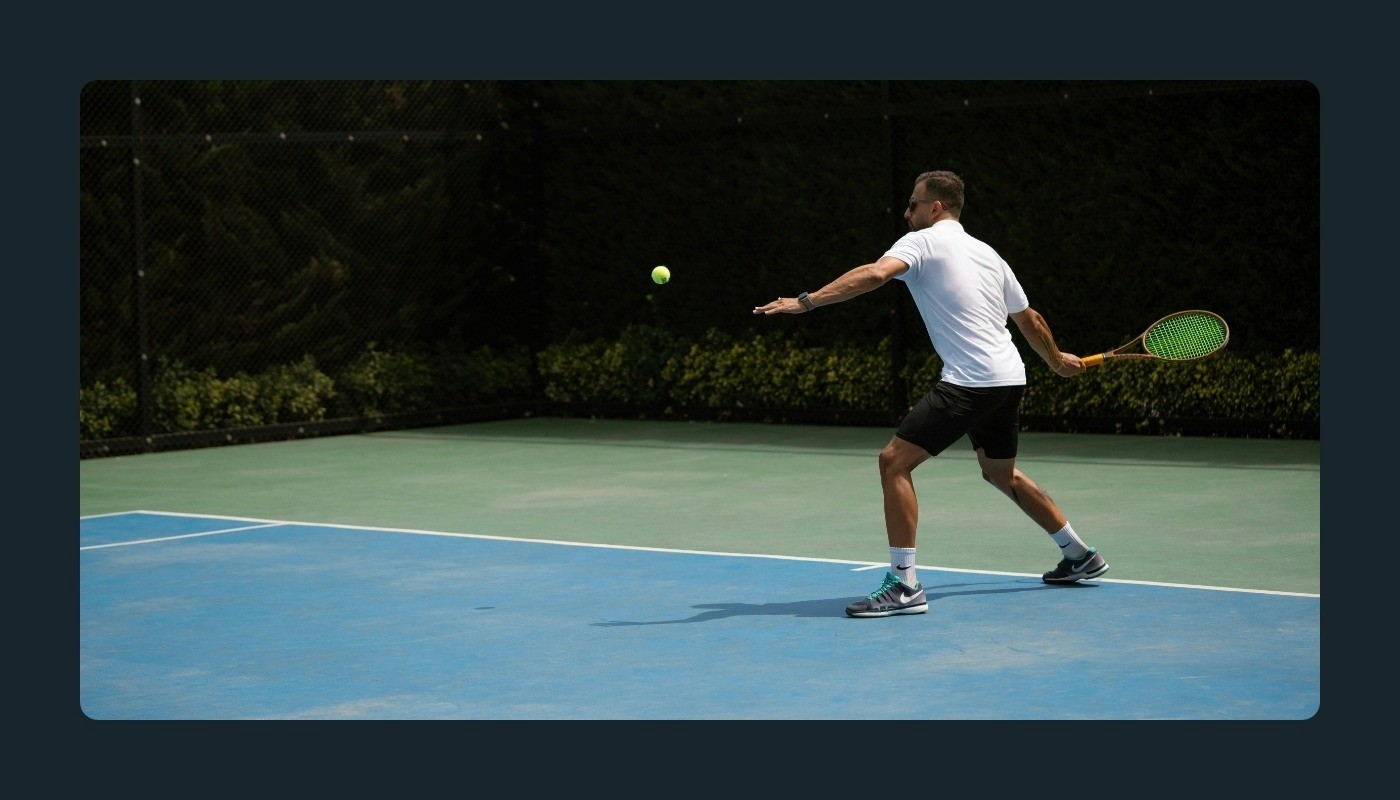
Poor footwork can make every shot harder than it needs to be, even when your swing timing is right.
Ready Position and Split Step
Every point starts from the ready position: feet shoulder-width apart, knees bent, racquet in front, weight on the balls of your feet. A split step, a small hop timed as your opponent makes contact, loads your legs to push off in any direction.
Moving to the Ball
Use short, quick adjustment steps rather than big lunges. Side shuffles work for nearby balls, and a crossover step handles wider ones. The USTA's coaching curriculum emphasizes recovering to the center after every shot.
Step 4: Build Tennis-Specific Fitness

Tennis requires quick bursts of speed, lateral agility, core stability, and endurance. A few targeted exercises can help you play tennis better and recover faster.
Key Areas to Work On
Lateral agility: Cone drills and ladder drills train quick side-to-side movement, mirroring how you cover the court during rallies.
Core strength: Planks and rotational exercises can improve balance and help generate power from your hips rather than your arms.
Cardiovascular endurance: Interval sprints simulate the stop-and-start nature of a match.
Flexibility: Light stretching before and after sessions may reduce stiffness and support a fuller range of motion.
Even 15 to 20 minutes of conditioning two or three times a week can improve your movement noticeably.
Step 5: Practice with Purpose
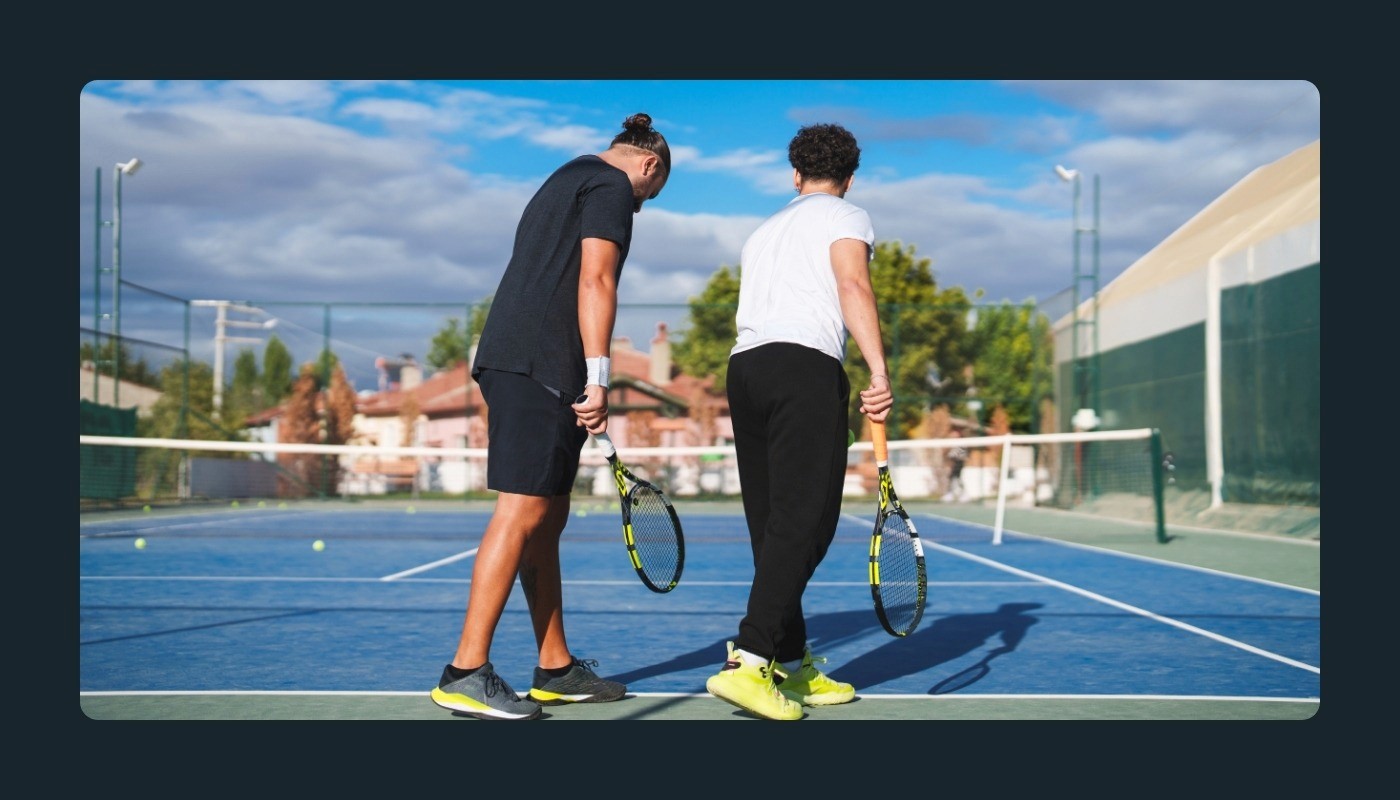
Deliberate practice tends to produce faster results than casual hitting. Focusing each session on something specific is how to improve at tennis efficiently.
Structure Your Practice Sessions
A simple framework for a productive practice session:
Warm up (5 to 10 minutes): Mini-tennis or short-court rallies to find your timing.
Focused drill (15 to 20 minutes): Work on one shot or pattern, such as cross-court forehands or approach volleys.
Point play (15 to 20 minutes): Play out points to apply what you practiced under match-like pressure.
Serve practice (5 to 10 minutes): End with serves aimed at specific spots in the service box.
No hitting partner? A wall can be one of the most effective solo tools for building stroke consistency. Whether you practice against a wall or play a full match, recording your sessions with a phone behind the baseline can reveal patterns you might not notice during play.
Step 6: How to Get Better at Tennis with Strategy

Once the fundamentals feel comfortable, improvement often comes from playing smarter rather than hitting harder.
Shot Selection
Here are a few tennis tips and tricks that can win you more points:
Hit cross-court as your default. Cross-court shots travel over the lowest part of the net and land in the longest part of the court, giving you the most margin for error.
Go down the line only when you have an open court or a short ball to attack.
When in doubt, aim deep. A deep ball pushes your opponent behind the baseline and limits their options.
Net Play
Moving forward to volley can put pressure on your opponent and shorten the point. After a strong approach shot, move toward the net and keep the racquet head up with a compact swing.
Reading Your Opponent
Most recreational players have a weaker side. Directing more balls there often produces errors without needing to hit harder.
Step 7: Strengthen Your Mental Game

Frustration and nerves cost recreational players matches they could otherwise win, and composure during tight moments often separates close results.
Practical Mental Tips
Play one point at a time. The score does not change what you need to do at the current point. Focus on execution, not outcome.
Visualize your shots. Before a serve or between points, briefly picture where you want the ball to go. Mental rehearsal can help your body follow through more naturally.
Stay positive after errors. Letting one bad shot affect the next three is a pattern that compounds quickly.
Players who stay calm under pressure tend to make fewer unforced errors and play closer to their actual ability.
Step 8: Play Matches and Review Your Performance
Matches reveal which skills hold up under pressure. Drilling alone cannot replicate the tension of real points.
Play Against Different Levels
Playing against stronger opponents can force you to react faster, while less experienced players give you space to try new strategies.
Review Your Game
One of the fastest ways to improve at tennis is by watching yourself play. Patterns invisible during a match become obvious on video, and modern analysis tools can remove dead time between points, turning a 90-minute session into a focused review in under 10 minutes.
Conclusion
Getting better at tennis rewards patience and consistency. Focus on the fundamentals and review your matches regularly.
For players looking for a faster way to review matches and track progress, Spintip can help. Place your phone behind the baseline, tap Start, and go play. The app auto-calibrates, removes dead space between points, and delivers a complete game review the moment you stop.
VIEWPOINT lets you swipe point by point, each rally tagged by outcome and performance level, with ~5x faster review than raw footage. PULSE assigns an NTRP-style performance number updated after every point, so you can track your level over weeks.
SAGE, the continuously improving AI Coach, delivers tactical pop-ups between points and a post-game summary with action items. When a specific point confuses you, ANALYZE lets you record your question directly in the clip, inscribed as a subtitle, and send it to a certified coach.
Download Spintip free and get your first game review at spintip.com.
How long does it take to get better at tennis?
Can I learn how to play tennis without a coach?
What is the most important tennis skill for beginners?
How often should I practice tennis to improve?
Does watching professional tennis help improve my game?


