Stefan Stefanov

Confidence can shape how a young athlete performs, how long they stay in sports, and how they handle pressure on and off the court. Sport confidence, the belief a young player holds about their ability to perform and succeed, does not always come naturally. Many kids struggle with self-doubt, especially when results do not go their way.
In short, learning how to build confidence in a young athlete starts with small, consistent actions. Setting achievable goals, focusing on effort over outcomes, reviewing actual gameplay, and encouraging positive self-talk can all help a young player develop lasting self-belief. The good news is that confidence is not a fixed trait. With the right support from parents and coaches, any young player can grow it over time.
According to the Aspen Institute's State of Play 2025 report, about 55% of American youth ages 6 to 17 played organized sports in 2023. A Washington Post analysis citing the National Alliance for Youth Sports found that roughly 70% of kids in the U.S. stop playing organized sports by age 13, often because the experience stopped being fun. Loss of confidence often plays a direct role in that decision. When kids feel like they cannot keep up or fear making mistakes, the joy fades, and dropout follows.
So how do you actually help a young athlete feel more confident? Parents and coaches searching for how to get confidence in sports often overcomplicate the answer. Here are eight practical steps that anyone can put into action right away.
8 Steps to Build Confidence in Young Athletes

Confidence does not appear overnight. For parents and coaches figuring out how to increase confidence in sports, the path forward is straightforward, repeated positive experiences, honest feedback, and a supportive environment. Each step below focuses on one specific action you can take.
Reading about confidence can help, but real belief tends to grow when a certified coach watches a young athlete's actual game and offers specific guidance based on real play and real mistakes. That kind of feedback can turn effort into lasting confidence.
Spintip bridges that gap. The app captures your child's match and tracks performance over time, so progress becomes visible rather than invisible. Certified coaches can review real footage and send feedback that shows your young athlete exactly where they are growing.
Download Spintip for free and give your child proof that the work is paying off.
Step 1: Set Small, Specific Goals
Big goals like "win the championship" can feel overwhelming for a young player. Smaller goals give kids something they can actually reach on a weekly or even daily basis.
A good goal is specific, measurable, and within the athlete's control. For example:
"Complete 10 accurate passes during practice."
"Hold a consistent toss on every serve attempt."
"Stay focused on footwork during the first three points of every game."
When young athletes hit these smaller targets, they experience regular moments of success. Each small win stacks on the last one, and over time, that steady progress can build genuine belief in their abilities. The key is to make sure the goal focuses on something the child can control, not something dependent on an opponent or a final score.
Step 2: Praise Effort and Process, Not Just Results
One of the simplest ways to improve your game over time is to focus on the process rather than the scoreboard. When parents and coaches only celebrate wins, kids start to tie their entire sense of worth to outcomes they cannot fully control.
A better approach is to praise specific effort and improvement. Instead of "Great game, you won!" try "You stayed calm during that tiebreak and kept placing the ball where you wanted. That took a lot of composure." According to TrueSport, a U.S. Anti-Doping Agency initiative, praising effort can give kids a strong foundation in self-belief because effort is something they can always control.
Once kids understand that working hard and improving are what matter most, setbacks become learning opportunities rather than reasons to quit. Psychologist Carol Dweck at Stanford University calls this a "growth mindset," and her research suggests it can be one of the strongest foundations for lasting confidence in young people.
Step 3: Create a Supportive Environment
The atmosphere around a young athlete, at home, on the court, and in the car ride after a match, shapes how they feel about themselves. A negative or high-pressure environment can crush confidence quickly.
Here are a few ways to keep the environment positive:
Avoid criticizing performance immediately after a game. Let the emotions settle first.
Ask open-ended questions like, "What was your favorite moment today?" instead of "Did you win?"
Keep sideline commentary encouraging, not instructive. Save coaching for practice.
Above all, the environment should feel fun. When kids enjoy the process, they stay engaged and open to learning. A supportive environment does not mean avoiding honest feedback. Young athletes actually benefit from constructive input. The difference is in how and when that feedback arrives. Feedback given with care, focused on what to do next, tends to build confidence rather than break it.
Step 4: Teach Positive Self-Talk
The words young athletes say to themselves during competition can either lift them up or drag them down. Positive self-talk is a practical mental skill that may help athletes stay focused and manage pressure.
Simple phrases like "I can handle this," "Next point," or "Stay loose" can redirect attention away from mistakes and back toward the present moment. According to sports psychology practitioners, athletes who use constructive self-dialogue tend to perform better under pressure and recover faster from errors.
Parents can model positive self-talk at home and encourage kids to develop their own go-to phrases. A short cue word like "focus" or "breathe" can serve as a quick reset during high-stress moments in a match.
Step 5: Use Video Review to Show Real Progress
One of the biggest confidence killers for young athletes is the feeling that they are not improving. Sometimes progress happens gradually, and without evidence, a player may not notice the gains at all.
Reviewing match footage point by point gives a young athlete a clear, objective picture of what they are doing well and where they can improve. Video removes guesswork. A player who thinks they "played terribly" may actually see that their footwork and shot selection were solid, and only a few key moments need work.
Watching your own performance also helps build self-awareness, a core ingredient of lasting confidence. When kids see their own growth over weeks and months, the evidence of improvement is right in front of them.
Step 6: Encourage Trying Multiple Activities
Early specialization in a single sport can sometimes narrow a young athlete's confidence base. When a child's entire identity is wrapped up in one activity, a bad stretch in that sport can feel like a total personal failure.
Playing multiple sports or activities, especially before the teenage years, may help kids develop a broader set of skills and build a more resilient sense of self. According to the Aspen Institute's Project Play research, early diversification tends to support long-term athletic development while reducing the risk of burnout and dropout.
A child who plays tennis in the spring, basketball in the winter, and swims in the summer can draw confidence from multiple sources. A rough patch in one sport does not erase the wins in another.
Step 7: Normalize Mistakes and Setbacks
Every athlete, from beginners to professionals, makes mistakes. How a young player responds to those mistakes often depends on how the adults around them react first.
If a parent or coach treats every error like a crisis, the child may start fearing mistakes. If adults frame errors as a natural part of learning, the child begins to see setbacks as temporary, not permanent. A study published in Frontiers in Public Health found that negative experiences, including poor coaching responses to mistakes, were among the leading factors in youth sports dropout.
Simple reframes can make a big difference:
"What can you try differently next time?" instead of "Why did you do that?"
"Mistakes are part of getting better," instead of silence or frustration.
"You handled that tough moment well," when a child recovers from an error mid-game.
Encouraging young athletes to measure progress against their own past performance, rather than comparing themselves to teammates or opponents, can also help reduce self-doubt. When young athletes feel safe to fail, they often take more risks, try new skills, and may grow faster.
Step 8: Visualize Success Before Competition
Mental rehearsal, sometimes called visualization, is something athletes use at every level. Young players can benefit from picturing themselves executing skills successfully before a match or practice session.
Visualization does not require any special equipment. A young tennis player might spend two minutes before a match imagining a strong first serve, smooth footwork on returns, or staying composed during a close game. A pickleball player might picture consistent dinking and confident volleys at the kitchen line.
Combining positive self-talk with mental imagery may help athletes feel more prepared and less anxious before competition. A brief session before a match can help a young player walk onto the court feeling calmer and more prepared.
Putting All 8 Steps Together
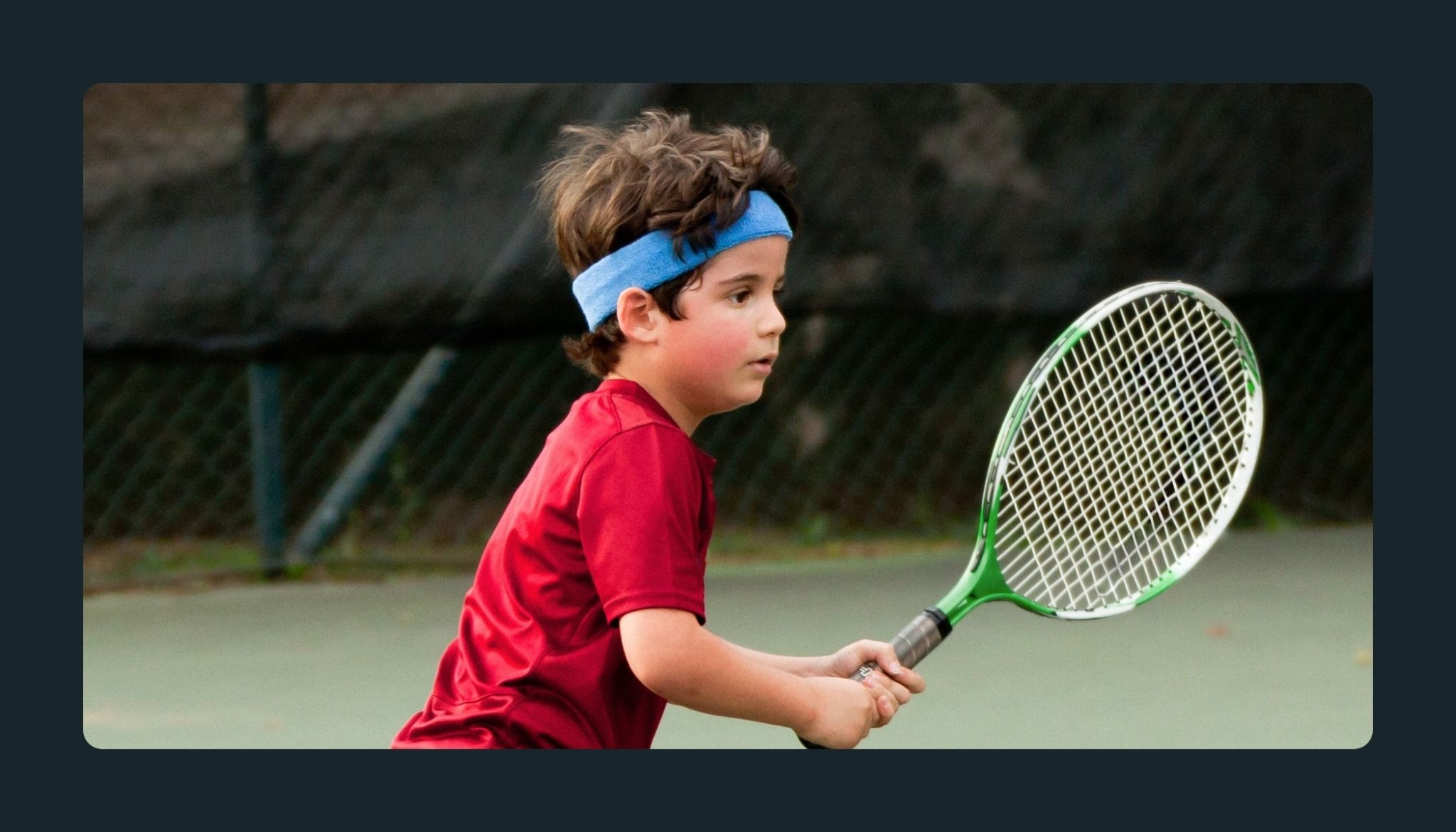
No single strategy will magically transform a young athlete's confidence. Lasting self-belief comes from layering these approaches over time. For anyone wondering how to improve confidence in sports, the answer is not one big fix but many small actions working together. A parent who praises effort while also helping their child set specific goals and review their actual gameplay creates a powerful confidence-building loop.
Confidence often functions more like a skill than a fixed personality trait, and parents and coaches have a direct role in helping young athletes develop it.
Conclusion
Understanding how to boost confidence in sports starts with consistent, everyday actions. Set small goals. Praise effort. Create a positive environment. Teach your child to talk to themselves with encouragement. Use video to show real, visible progress. Normalize mistakes. And encourage mental rehearsal before games.
Spintip can support several of those steps in one place. Parents can record a junior tournament match by placing a phone behind the baseline and tapping start. The app auto-calibrates the court and delivers a complete game review the moment play ends, with no uploads or waiting.
VIEWPOINT lets a young athlete swipe through every point with dead space removed, making a 90-minute match reviewable in minutes. Each point carries a performance level from PULSE, a real-time score that tracks performance over time. For a young player working on specific goals, watching that number trend upward can be a powerful source of belief.
SAGE, the app's AI coach, adds post-game action items. When a confusing moment comes up, ANALYZE lets players pick that point, record a question, and send it directly to a certified coach for personalized feedback.
For parents, the progress curve becomes visible across an entire season. And when a young athlete hits a great shot, SHARE turns winners into one-tap highlight clips ready for social media or a family group chat.
Download Spintip free and give your young athlete a new way to see their progress after every match.
At what age should parents start working on confidence in sports?
How do you know if a young athlete is struggling with confidence?
Can too much praise hurt a young athlete's confidence?
How can coaches help improve confidence in sports for young players?
Does watching game footage actually help build confidence?


