Stefan Stefanov

Tennis has a way of humbling you fast. You show up to the court, grab a racquet, take a swing, and the ball clips the net. Or sails long. Or catches the frame and goes sideways. Ten minutes in, you are already wondering what you are doing wrong, but there is so much happening at once that you cannot pinpoint the problem.
That is the tricky part about figuring out how to learn to play tennis. Not the strokes themselves, but knowing what to focus on first. Search online, and you will find hundreds of tips, most of them aimed at people who can already rally. For actual beginners, the path forward is simpler than it looks: a few core skills in the right order, practiced on real balls, and built up from there.
With 27.3 million Americans on the court in 2025, according to the USTA's 2026 participation report, a lot of new players are working through this same stage. The tennis tips for beginners below will help you skip the confusion and start with what actually matters.
Key Takeaways
Start with the right racquet size and proper court shoes before anything else.
A continental grip is the most versatile grip for beginners.
Focus on the forehand early since you will hit more forehands than any other shot.
Footwork matters as much as your swing; stay light on the balls of your feet.
Consistency beats power at every beginner level.
A warm-up routine can help protect your joints and reduce the chance of injury.
Those are the fundamentals worth focusing on. Before diving into each one, something is worth keeping in mind.
Reading guides and watching YouTube videos can teach you the theory behind every stroke. That knowledge has real value. But technique serves one purpose on the court: controlling the ball to a target so you can win the point. Knowing what a good forehand looks like and being able to fix yours during a real match are two different things, and that gap is where most beginners stay stuck. A certified coach who can watch your actual game and tell you what to change closes that gap faster than anything else.
Spintip gives you that connection. Record your session with the best camera app for tennis, review performance insights on your real groundstrokes, and send any point to a certified coach for feedback. Download Spintip free and connect your practice to real coaching.
The tips below give you a strong foundation to start with.
Tennis Tips for Beginners: A Step-by-Step Guide
Before jumping into strokes and strategy, a few foundational choices can set you up for a smoother start.
Step 1: Pick the Right Equipment

You do not need expensive gear to start, but a few things matter.
Racquet size: Most adult beginners do well with a midplus head size (100 to 105 square inches) and a weight under 11 ounces.
Grip size: When you wrap your hand around the handle, a finger-width gap should fit between your fingertips and palm.
Shoes: Wear court-specific tennis shoes. Running shoes lack the lateral support tennis demands, and the ITF notes proper footwear can help reduce ankle and knee strain.
A can of pressurized tennis balls and a water bottle complete your starter kit.
Step 2: Learn the Continental Grip
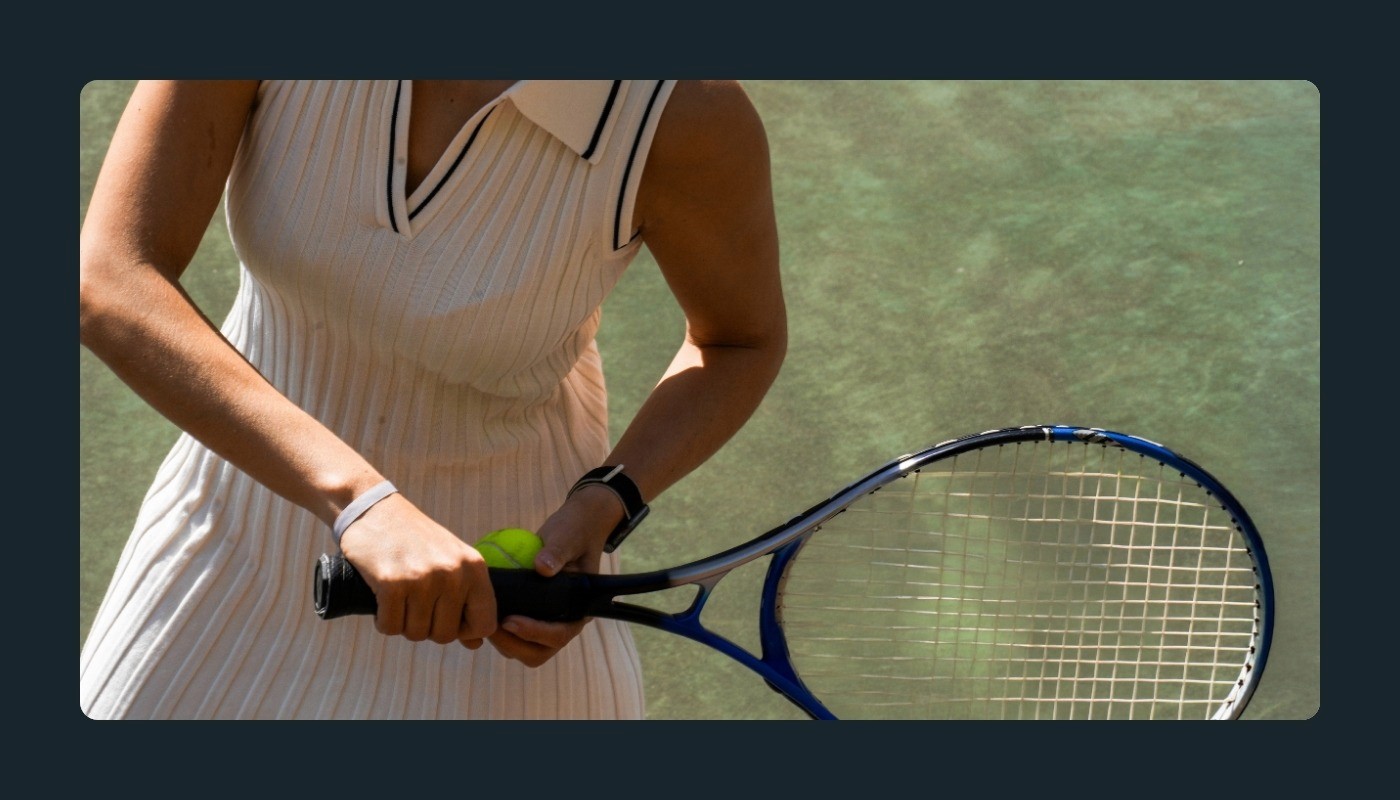
Your grip controls the racquet face, which controls where the ball goes. Of all the tennis techniques for beginners to get right early, grip matters most.
The continental grip works for serves, volleys, and slices. To find it, hold the racquet like you are shaking someone's hand, with your index knuckle on the second bevel. Pair the continental with an eastern forehand grip for groundstrokes, and you have enough range to rally and play points.
Step 3: Build Your Forehand First

The forehand is the shot you will hit most often, and a reliable one makes rallying feel natural.
For a basic forehand:
Turn your shoulders sideways as the ball approaches.
Swing from low to high, making contact slightly in front of your body.
Follow through over your opposite shoulder.
At first, focus on clean contact and a consistent arc over the net rather than power.
Step 4: Add a Stable Backhand

Once your forehand feels consistent, shift attention to the backhand. A two-handed version tends to be easier for beginners because the extra hand adds stability.
Use both hands on the grip, with your non-dominant hand doing most of the work.
Turn your shoulders fully so your back faces the net.
Swing through the ball at waist height and finish high.
A dependable backhand removes a major weak spot from your game and can help you stay in more points.
Step 5: Work on Footwork Early

Footwork separates players who struggle from those who improve quickly. Even a solid swing falls apart without good positioning.
A few habits can help right away:
Stay on your toes. Keep a slight bounce between shots so you can move in any direction.
Split step. Take a small hop as your opponent hits the ball. Landing on the balls of your feet gets your body ready to react.
Avoid crowding the ball. Many beginners stand too close, forcing a cramped swing. Extend your arm and let the racquet do the reaching.
Quick adjustment steps as you approach the ball tend to improve accuracy far more than big lunges.
Struggling to spot your own footwork habits? Recording your sessions and reviewing your movement point by point can show you patterns that are impossible to feel in real time.
Step 6: Start with a Simple Serve

The serve starts every point, but for beginners, the goal is simply getting the ball in play.
Stand behind the baseline with your front foot angled toward the net post.
Use the continental grip.
Toss the ball slightly in front of you and above your head.
Swing up as if throwing a ball over a tall fence.
According to USTA beginner guidelines, a consistent toss is the first key to a reliable serve. Hall of Fame coach Nick Bollettieri advised working on the toss separately before adding the full swing, and most coaches still teach it that way.
Step 7: Warm Up Before Every Session
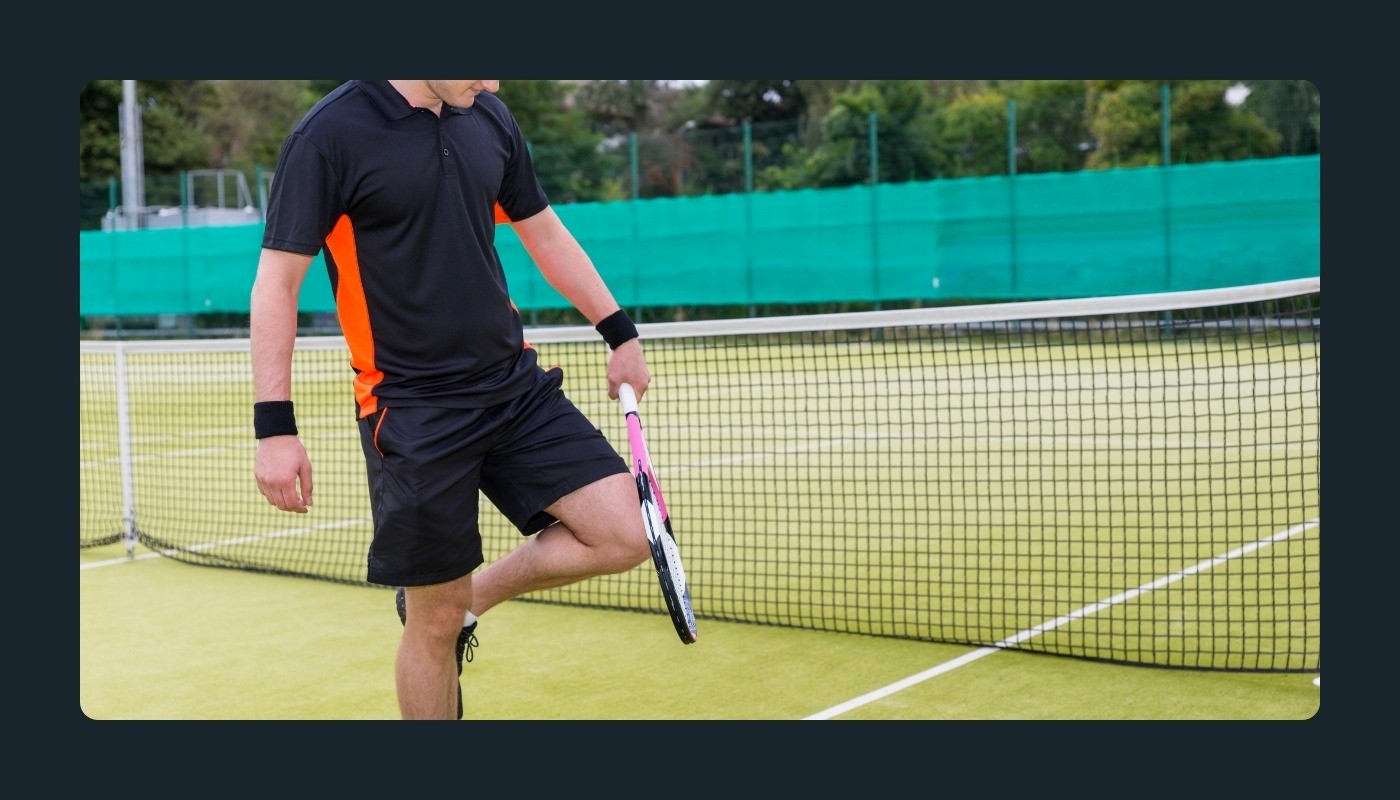
Tennis involves quick sprints, sudden stops, and fast direction changes. A warm-up can prepare your muscles and joints and may reduce the risk of common injuries.
A simple warm-up routine could include:
Five minutes of light jogging or jump rope.
Dynamic stretches for your shoulders, hips, and ankles.
Mini tennis: rally gently from the service line before moving back to the baseline.
Mini tennis is one of the most effective ways to ease into a session and build hand-eye coordination before full-speed rallies.
Step 8: Focus on Rallying, Not Winning

Once your strokes start to take shape, the next milestone is keeping the ball in play. Rallying turns tennis from a frustrating series of missed shots into an actual game.
A good starting goal might be five balls back and forth without an error. Once that feels comfortable, push for 10, then 15.
Tips for longer rallies:
Aim for the middle of the court, not the lines.
Hit with moderate pace; control matters more than speed.
After every shot, return to the center of the baseline.
Reviewing what works after a session can give you clear direction for your next practice.
Step 9: Find Structure and Feedback

Watching videos and reading guides can help, but nothing replaces practice with real feedback.
Group clinics at local clubs or parks. Many USTA sections offer beginner-friendly programs.
Private or semi-private lessons for more focused attention.
Video analysis to see your strokes from an outside perspective. Recording and reviewing your form can reveal patterns that are hard to feel in the moment.
Conclusion
Learning how to play tennis does not require perfection on day one. Start with the right gear, learn a grip, build your strokes, and keep the ball in play. Knowing how to get better at tennis comes down to consistency and patience.
Spintip makes the review side effortless. Place your phone behind the baseline, tap start, and go play. The app auto-calibrates to court dimensions and surface instantly.
After your session, swipe through your points with VIEWPOINT. Dead space is removed automatically, making review roughly 5x faster than scrubbing raw footage. Check your performance number with PULSE, which tracks whether your level is trending up or down point by point. During play, SAGE delivers tactical pop-ups like "recover to center" or "move your feet," and after the session, provides a summary of action items. SAGE is continuously improving, and getting feedback seconds after a mistake can make a real difference.
Pick any point, record your question, and send it through ANALYZE. Certified coaches worldwide respond with video or voice feedback. When you hit a shot worth celebrating, one tap turns your best moments into a highlight reel ready for Instagram or TikTok.
How long does it take to learn the basics of tennis?
What is the best grip for a tennis beginner?
Do I need to take lessons, or can I learn tennis on my own?
What should I wear to play tennis?
How often should a beginner practice tennis?


