Stefan Stefanov

First time playing pickleball, you will probably lose. A lot. And you will have no clue what went wrong.
Someone will tell you to "get to the kitchen line," and you will wonder why there is a kitchen on a sports court. You will serve into the net. You will volley a ball you were supposed to let bounce. And after an hour, you will want to come back and do it all over again.
That is pickleball. Easy to fall in love with, tricky to actually get right. According to the Sports & Fitness Industry Association (SFIA), 24.3 million Americans played in 2025. Most of them figured it out the same way you will: a few good pickleball tips for beginners and enough court time to make them stick.
One thing worth knowing up front: tips can point you in the right direction, but no article can watch your game and tell you what to fix. A real coach who sees your real shots will always help more. And most beginners play without anyone coaching them.
Spintip bridges that gap as a free camera app for pickleball that records your session, tracks your performance, and connects you with certified coaches.
Download the app and start getting real feedback.
Here is what to focus on first.
Key Takeaways
A mid-weight paddle ($40 to $80) and court shoes are the only gear you need to start.
Learn the two-bounce rule and the kitchen (non-volley zone) before your first game.
Master the dink early. Soft, controlled shots win more points than power at every beginner level.
Get to the kitchen line after every return. The team that controls the net controls the match.
Placement beats power. Aim for the middle and let your opponents make the mistakes.
Record and review your own games to spot habits you cannot see during live play.
Getting the Right Gear

A paddle, court shoes, and the right ball are all you need to get started.
Choosing Your First Paddle
A mid-weight paddle in the 7.8 to 8.2 ounce range tends to work well for most new players. Paddles with a polymer honeycomb core offer a good balance of control and forgiveness. You can find solid beginner paddles in the $40 to $80 range.
Shoes and Clothing
Wear court shoes or tennis shoes with flat soles and good lateral support. Keep these basics in mind:
Outdoor pickleballs have smaller holes and are heavier. Indoor balls have larger holes and move slower.
Comfortable, breathable athletic clothing is all you need.
Many public courts and clubs provide balls and even loaner paddles, so you can try the sport before buying anything.
The Court Layout
A standard pickleball court measures 20 feet wide and 44 feet long, per USA Pickleball's official rules. The net sits at 36 inches on the sides and 34 inches at the center.
The Kitchen (Non-Volley Zone)
The kitchen stretches 7 feet on each side of the net. You cannot volley while standing inside the kitchen or while your momentum carries you into it. You can step in to hit a bounced ball. The kitchen prevents players from standing at the net and smashing every ball, which creates the strategy that makes pickleball interesting.
Core Rules You Need to Know

Pickleball has a handful of rules that control how every rally plays out.
Scoring
Pickleball uses a three-number scoring system: server's score, receiver's score, and server number (1 or 2 in doubles). A typical call sounds like "4-2-1." Only the serving team can score, and games go to 11 with a win-by-2 requirement.
The Two-Bounce Rule
After the serve, both sides must let the ball bounce once before hitting it. The return bounces on the receiving side, and the serving team's next shot must also bounce before anyone can volley. After those two bounces, either team can volley freely. Getting comfortable with this rule is one of the most valuable pickleball tips for day one.
Serving
All serves must be hit underhand, with paddle contact below the waist. The ball goes diagonally to the opposite service box and must clear the kitchen. You get one serve attempt.
Essential Pickleball Tips for Beginners: Basic Shots
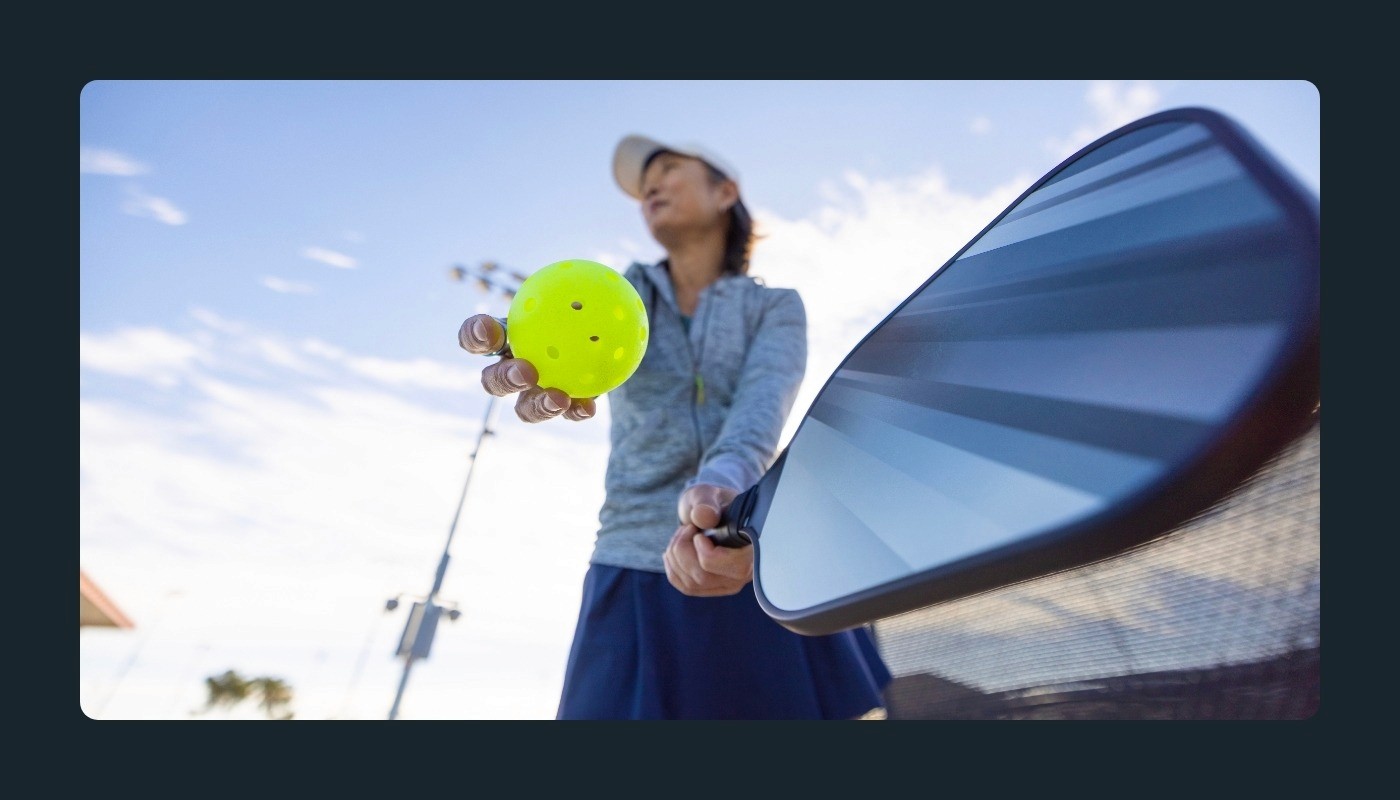
Once the rules make sense, the next step is learning a few core shots you can work on between games.
The Serve and Return
Focus on consistency over power when serving. For the return, aim deep to give yourself time to move toward the kitchen line.
The Dink
A dink is a soft, controlled shot from near the kitchen line that drops into your opponent's kitchen, forcing them to hit upward and keeping you in control. Most PPR-certified instructors, including PPR Vice President Sarah Ansboury, consider the dink the single most important shot for new players and one of the most practical tips for pickleball beginners at any level.
The Third Shot Drop
After the return bounces, the serving team typically hits a third shot drop, a soft, arcing shot from the baseline that lands in the opponent's kitchen. The purpose is to let the serving team move forward to the net safely.
Positioning and Movement
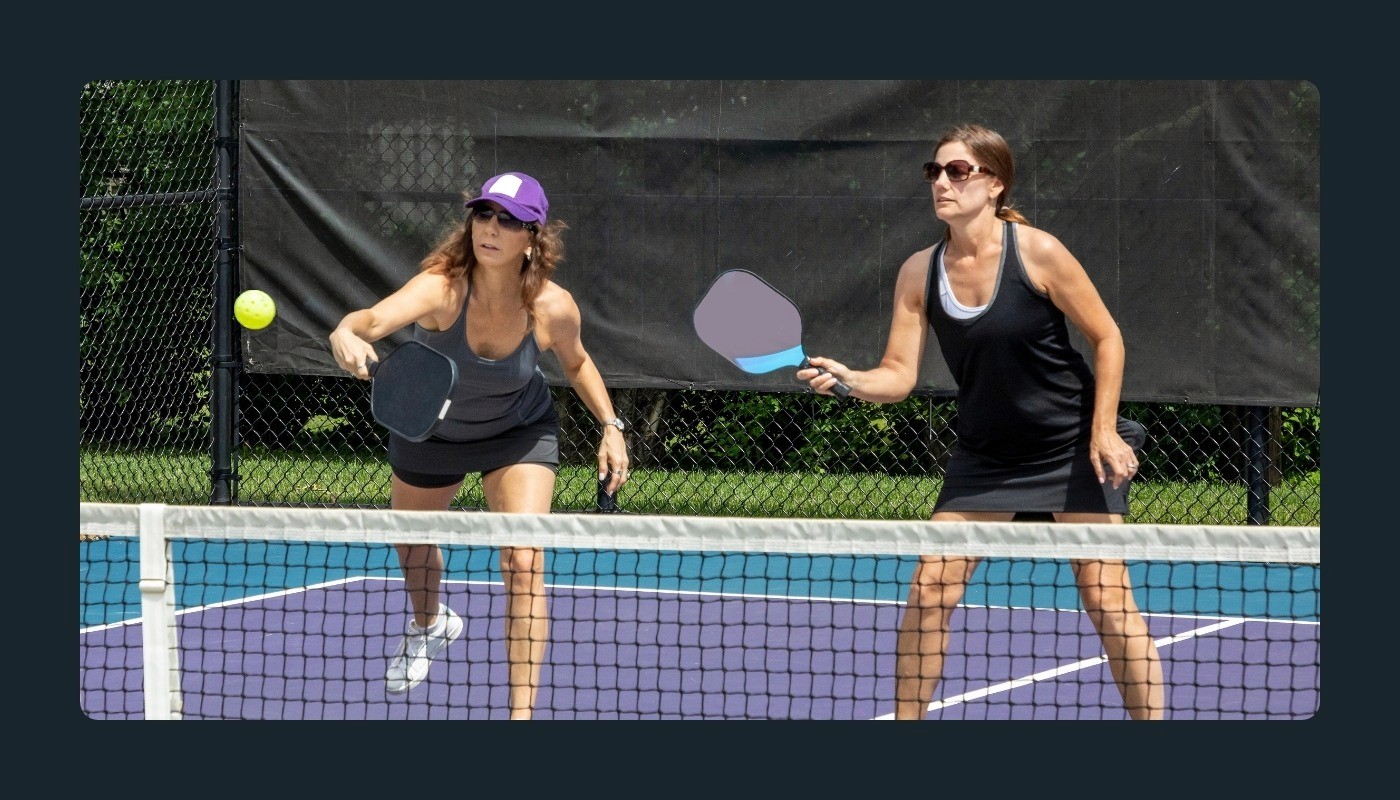
Where you stand matters more than how hard you hit.
Get to the Kitchen Line
The team that controls the area behind the kitchen line controls the match. After every return of serve, move forward.
The kitchen line gives you better angles for dinks and volleys.
Standing mid-court leaves you taking shots at your feet.
Move through mid-court quickly rather than camping there.
Move With Your Partner
Picture a 6-foot rope connecting you and your doubles partner. When one person slides left, the other slides too. Calling "mine" or "yours" on every ball prevents confusion, so make communication a habit from your first doubles game.
Stay in the Ready Position
When you are not actively hitting, keep your knees bent, feet shoulder-width apart, weight forward, and paddle up near your chest. Staying ready between shots may be the single most impactful habit for anyone wondering how to get good at pickleball.
Playing Smarter From Day One
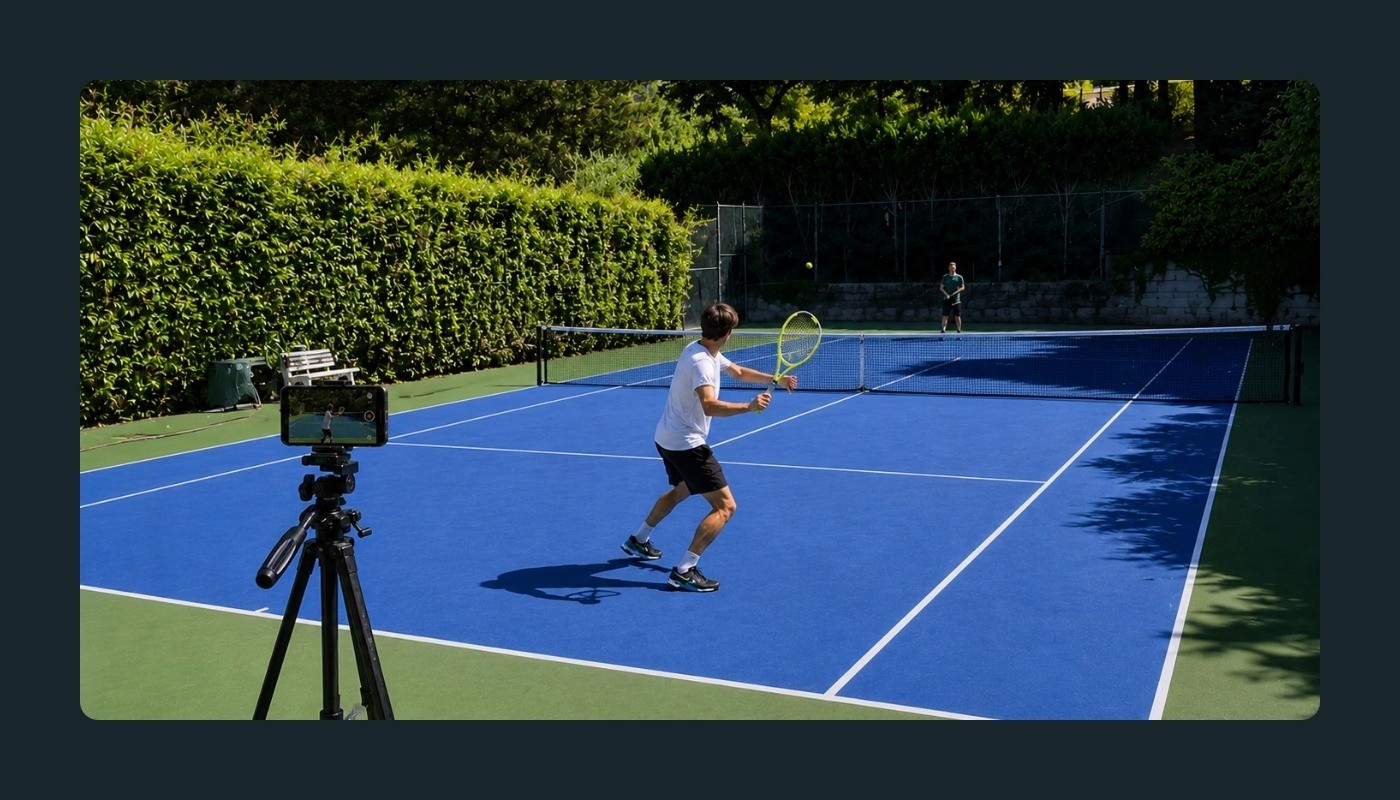
A few simple decisions make a noticeable difference in your first few weeks.
Placement Over Power
Aiming for open space wins more points than hitting hard. A well-placed shot to the middle creates confusion and limits your opponents' angles.
Keep the Ball Low and Be Patient
High shots get attacked. Low shots over the net are harder for opponents to put away. Patience matters just as much as shot selection here. According to USA Pickleball, roughly 75% of recreational rallies end on unforced errors, so the team that makes fewer mistakes usually wins.
Practicing With Purpose
Casual games are fun, but focused practice speeds up improvement:
Warm up with 10 to 15 minutes of dinking before playing games.
Practice your serve at the same spot until it feels automatic.
Ask a partner to feed you shots you struggle with.
Pickleball lessons for beginners, whether through a local clinic or a certified instructor, can help correct technique issues that are hard to spot on your own.
Court Etiquette
Pickleball has a strong culture of sportsmanship. A few habits help you fit in from day one:
Call the score before every serve, clearly and loud enough for all players.
Make honest line calls. When unsure, give the benefit to your opponent.
Do not offer unsolicited coaching to strangers.
Tap paddles with all players after every game.
At open play, respect the rotation so everyone gets equal court time.
Once you feel comfortable with the basics, finding courts is easy. The USA Pickleball Places to Play directory lists parks, recreation centers, and dedicated facilities across the country.
Conclusion
Getting started in pickleball does not require athletic talent or expensive equipment. Prioritize dinking, stay patient, and move with your partner.
Recording and reviewing your own play can reveal patterns you would never notice in the moment. Spintip is a free camera app for pickleball that uses on-device AI to record your session, calibrate the court, and deliver a complete game review when you press stop. No uploads, no cloud wait. Place your phone behind the baseline, tap Start, and go play.
After your session, VIEWPOINT lets you swipe through every point with dead space removed for roughly 5x faster review. Swipe up to save a highlight, swipe down to remove a point. PULSE gives you a live performance number for each point, so you can track whether your game is trending up or down over time. SAGE, the continuously improving AI coach, delivers tactical action items and inscribes AI-generated insights as subtitles directly into each point's video.
When you spot a confusing rally, ANALYZE lets you pick that point, record your question, and send it to a certified coach worldwide. Your question gets inscribed as a subtitle in the clip, and the coach responds with voice or video feedback at an affordable per-minute rate. When you nail a winner worth sharing, Spintip auto-extracts your best moments into a one-tap highlight reel formatted for social media.
Download the app and start getting real feedback.
What is the most important rule for pickleball beginners to learn first?
How long does it take to learn pickleball?
What equipment do I need to start playing pickleball?
What is the kitchen in pickleball?
How do I keep score in pickleball?

