Stefan Stefanov
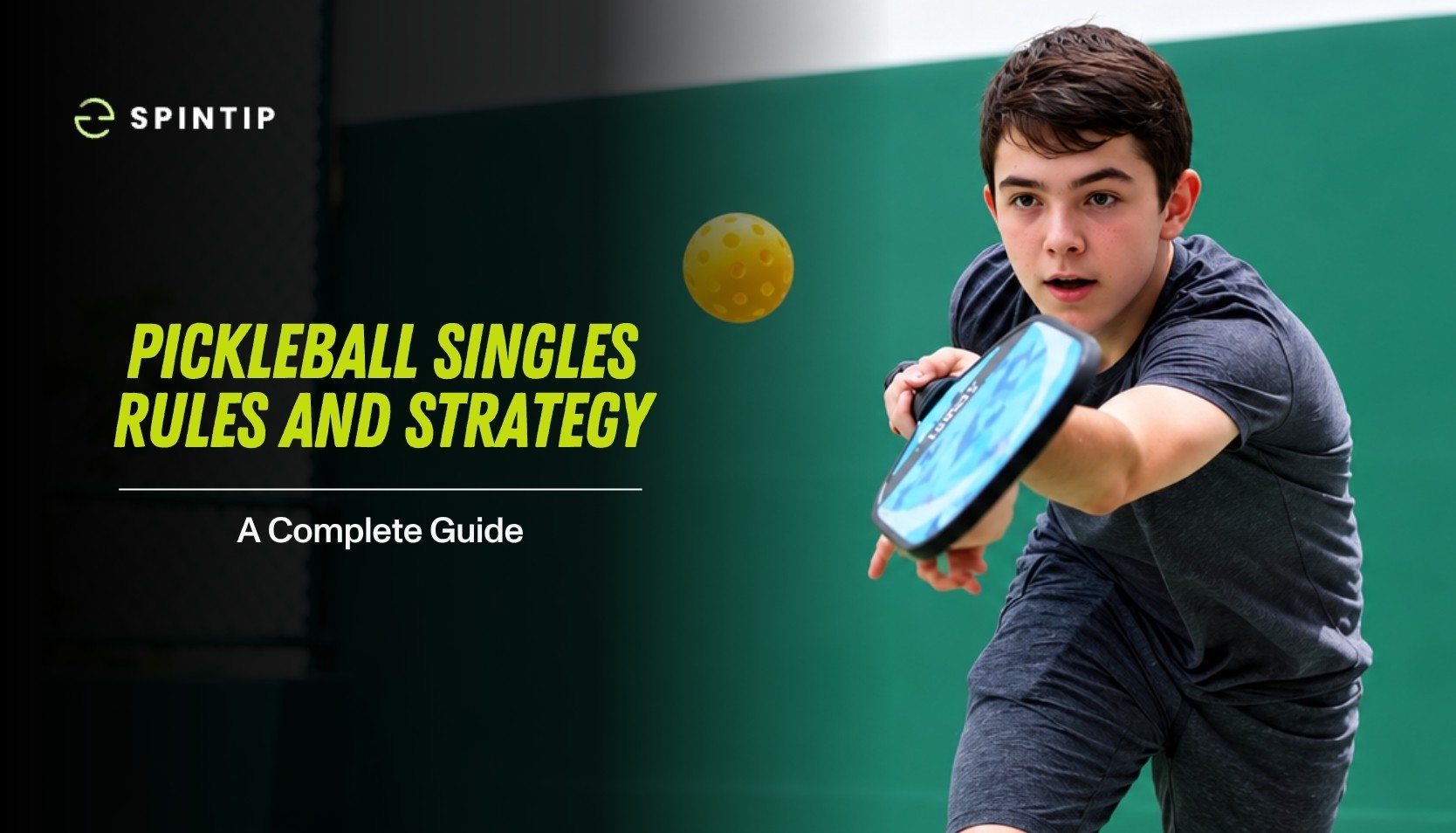
Most pickleball happens in doubles. Four players crowd a compact court, trade dinks at the kitchen line, and share the workload with a partner. But pickleball singles strips all of that away. No teammate. No one else to blame. Just you and your opponent on the same 20-by-44-foot court.
Singles pickleball is growing in popularity, especially among younger players and those with a tennis background. The rules are nearly identical to doubles, with a few key differences in scoring and serving. Once you understand those, the real challenge becomes strategy.
Under the 2026 USA Pickleball Rulebook, singles follows the same core rules as doubles on an identical 20-by-44-foot court with the same kitchen and double bounce rules. The key differences are scoring (two numbers instead of three), serving position (determined by whether your score is even or odd), and no first-server exception. Games use side-out scoring to 11 points, and only the server can score.
A guide like the one below can sharpen your understanding of singles rules, but nothing replaces a certified coach who can watch your actual rallies. Whether your serve is landing deep enough, your recovery to center is too slow, or you keep getting passed on the backhand side, a coach watching real points can spot what reading alone cannot. Spintip bridges that gap, connecting you with certified coaches while also capturing every point with performance insights built in.
Download Spintip for free and connect with a coach today.
How Pickleball Singles Scoring Works
Scoring tends to trip up new players in doubles. The good news: singles makes the process simpler.
The Two-Number Score Call
In doubles, you call three numbers before every serve: your score, the opponent's score, and which server you are (1 or 2). In singles, you only call two numbers: your score first, then your opponent's.
For example, if you have 4 points and your opponent has 2, you call "4-2" before you serve. The server's score always comes first.
Which Side to Serve From
Your score determines which side of the court you serve from. The rule is straightforward:
Even score (0, 2, 4, 6, 8, 10): Serve from the right side of the court.
Odd score (1, 3, 5, 7, 9): Serve from the left side of the court.
You keep serving until you lose a rally. When that happens, the serve passes to your opponent, and no point is awarded. Only the server can score. Games go to 11 points, win by 2.
Serving Rules for Singles Play
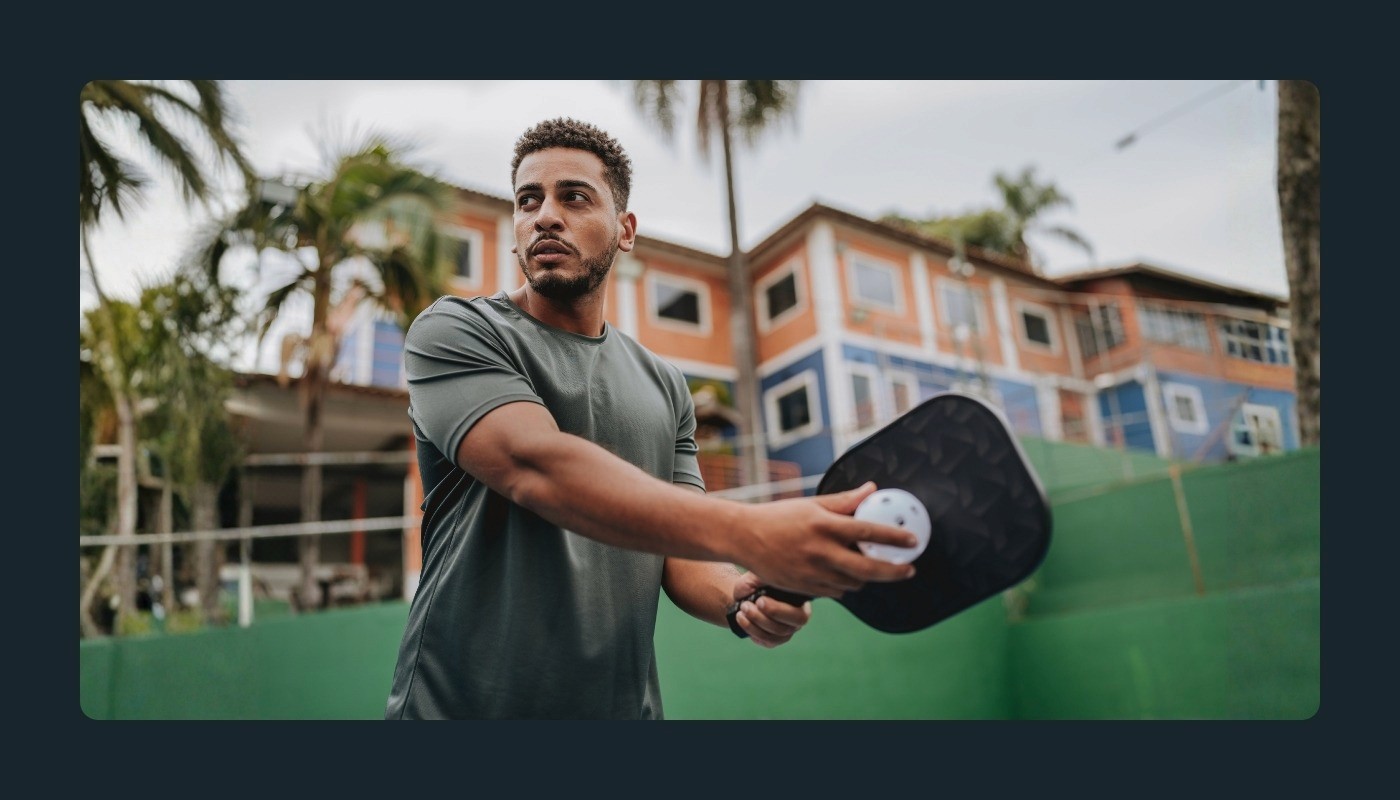
Serving in a solo game follows the same basic mechanics as doubles, but the rotation is simpler with only one player per side.
Where to Stand and How to Serve
The server must stand behind the baseline, between the centerline and sideline extensions, with at least one foot on the ground at contact. For a volley serve (hitting the ball out of the air), the paddle must contact the ball below the waist in a clear upward arc, with the paddle head below the wrist. A drop serve, where you let the ball bounce before striking, is also legal and does not carry those contact restrictions under the 2026 Rulebook.
The ball must travel diagonally and land in the opponent's service court, clearing the non-volley zone. If the serve hits the kitchen line, that counts as a fault.
No First-Server Exception
In doubles, a rule limits the starting team to one server on the first service turn. Pickleball rules for singles do not include that exception. The first server serves from the right side and continues until a fault occurs.
Court Size, Kitchen, and the Double Bounce Rule
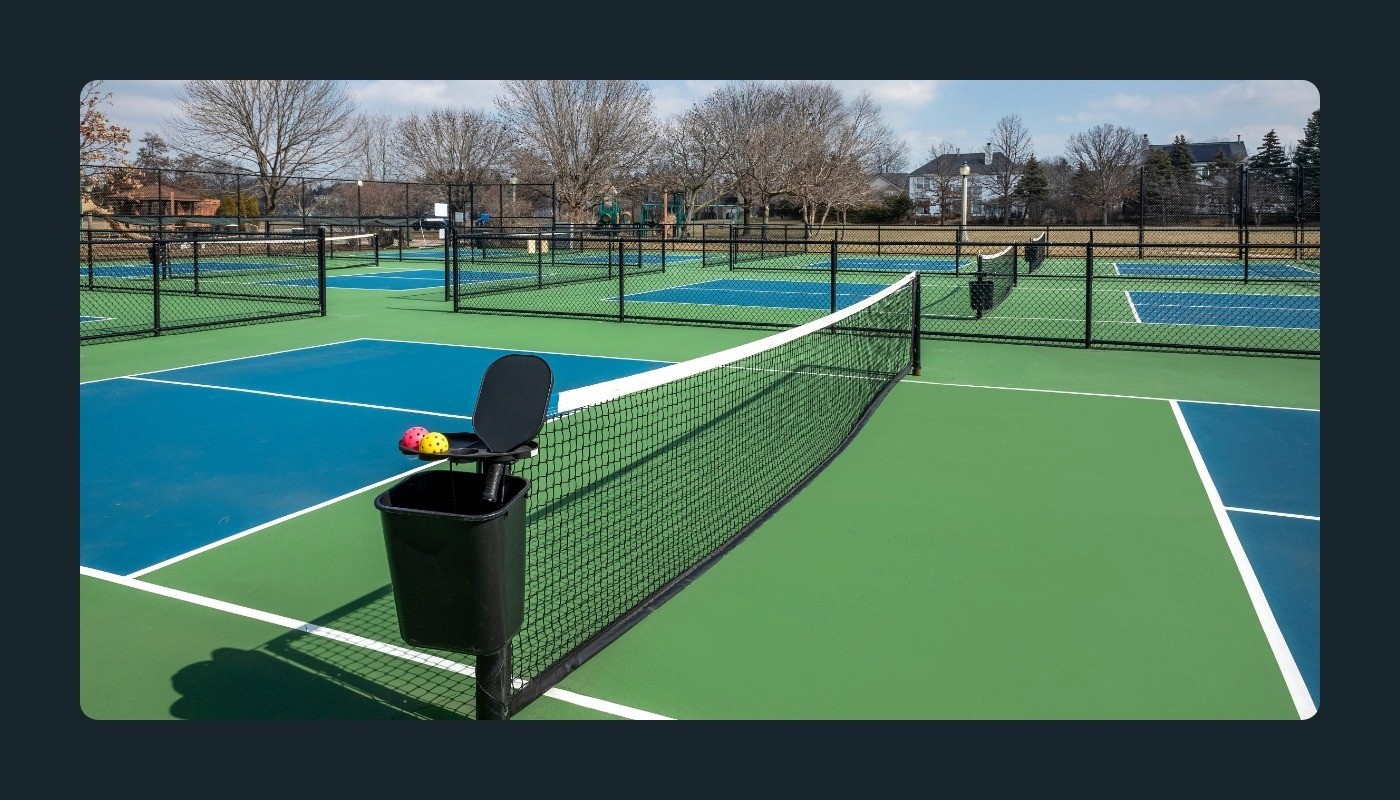
A few fundamentals carry over from doubles unchanged. Knowing what stays the same can prevent confusion on your first solo game.
Same Court for Singles and Doubles
Unlike tennis, which uses narrower sidelines for singles, a pickleball court does not change between formats. A standard court measures 20 feet wide and 44 feet long for both singles and doubles, per the USA Pickleball Official Rulebook. The net stands 36 inches at the sidelines and 34 at the center.
For singles, that means you cover all 440 square feet on your side of the net alone.
The Non-Volley Zone Still Applies
The kitchen, a 7-foot zone on each side of the net, works the same in singles as doubles. You cannot volley while standing in the kitchen or touching the kitchen line. You also cannot carry momentum into the kitchen after a volley.
You can enter the kitchen freely for shots that bounce first.
The Double Bounce Rule
After the serve, the return must bounce once before the receiving player hits it. The server must then let the return bounce as well. After both bounces have occurred, either player can volley or play the ball off the bounce.
How Singles Differs from Doubles
Singles pickleball rules are nearly identical to doubles, but the gameplay feels very different:
You cover the entire court alone. Every shot is your responsibility, and you need to move quickly between positions.
Scoring uses two numbers instead of three. The third number in doubles (which server you are) does not exist in singles.
More play happens from the baseline. Doubles often turns into extended exchanges at the kitchen line. Solo play tends to involve more groundstrokes from the back of the court, because rushing the net can leave too much open space behind you.
Fitness matters more. Covering 440 square feet alone is physically demanding, rewarding endurance, lateral quickness, and the ability to recover your court position.
There is no first-server exception. Both players serve under the same rotation rules from the start of the game.
Pickleball Singles Strategy Tips
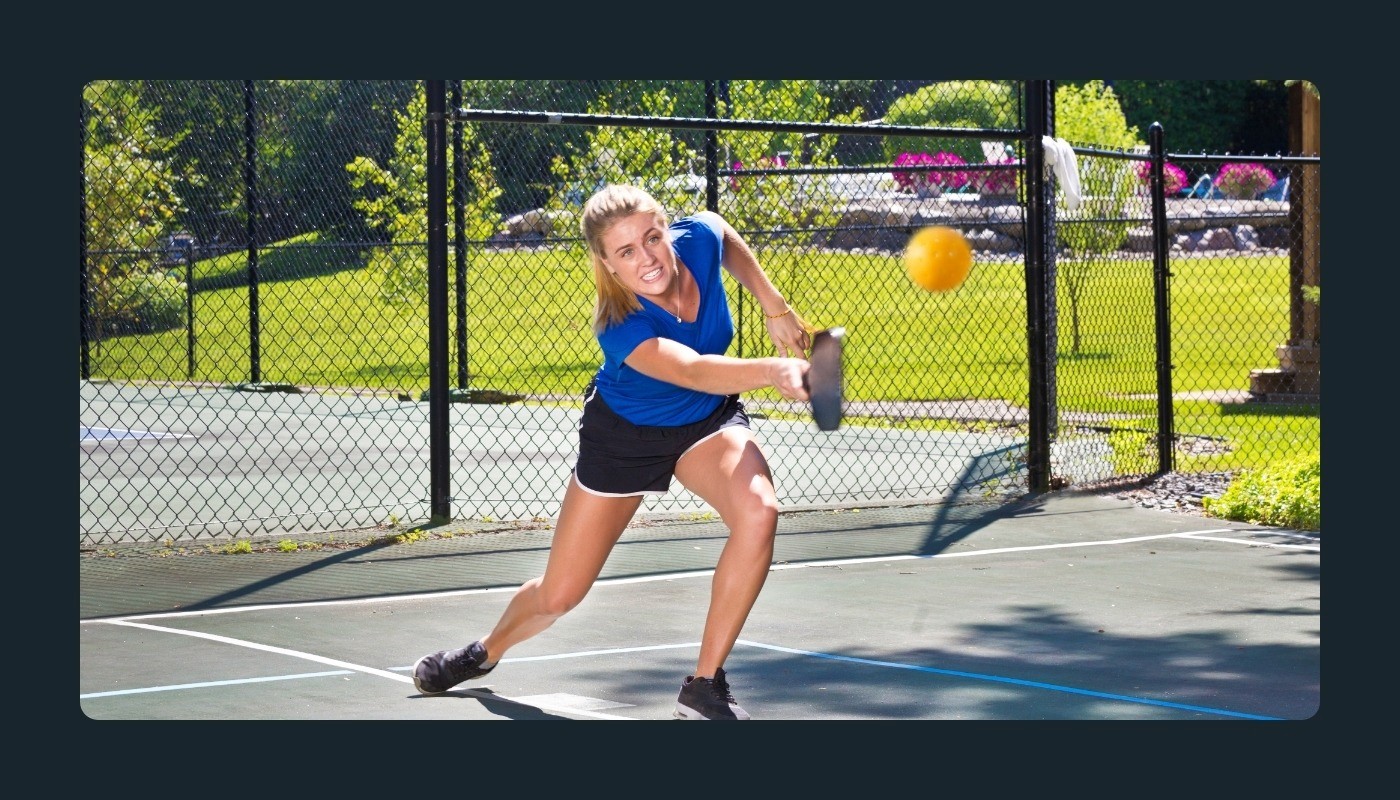
Knowing the rules is one part of the equation. Applying the right pickleball singles strategy can make the difference between scrambling and controlling the point. USA Pickleball recommends several tactics.
Serve Deep and Near the Center
A deep serve can push your opponent behind the baseline and limit return angles. Serving near the center, close to the centerline or "T," tends to cut down the distance you need to move for the next shot. Give yourself margin, because a missed serve is a free point.
Return Deep and Move Forward
A deep return can be just as important as a deep serve. Sending the ball deep and toward the center can neutralize your opponent's third shot and buy you time to move toward the kitchen line. Aim toward your opponent's weaker side, which for many players tends to be the backhand.
Recover to the Middle After Every Shot
Court positioning may be the single most important habit in singles. After every shot, move back to the center of the court. Staying centered can help you react whether your opponent goes crosscourt or down the line.
Target Your Opponent's Weaker Side
Most recreational players have a stronger forehand than backhand. Hitting consistently to the weaker side can force errors and create openings. Once your opponent starts covering that side, go the other way.
Play Against Momentum
Watch which direction your opponent is moving and send the ball the opposite way. Changing direction mid-stride is generally harder than covering open space, so playing against momentum can be more effective than hitting to the open court.
Be Patient and Let Errors Come
Aggressive shot-making wins some points, but patience tends to win more when playing solo. Place the ball deep, move your opponent side to side, and wait for a short or high ball you can attack. Consistent pressure often forces mistakes before you need to go for a winner.
What Is Skinny Singles?
Skinny singles is a variation that uses only half the court. Players compete on a down-the-line or crosscourt half, switching sides based on the score (even on right, odd on left). The format reduces court coverage and is less physically demanding.
Many players use skinny singles as a drill to sharpen shot placement and strategy that carries over to full-court play.
Conclusion
Singles rules are simpler than doubles in many ways, with a two-number score call and no partner rotation. The challenge comes from covering the entire court alone and building good habits around deep serving, center recovery, and patience.
Spintip can help you build better singles habits. Place your phone behind the baseline, press Start, and the app auto-calibrates for pickleball instantly. Play your match without touching the phone again.
When you finish, VIEWPOINT lets you swipe through every point with dead space removed for roughly 5 times faster review. Each point shows a performance level and a win/loss/error tag, so you can spot where your positioning or serve placement cost you the rally.
PULSE assigns a live performance number point by point, tracking whether your game is trending up or down across the match.
SAGE, the AI Coach that is continuously improving, delivers in-play tactical pop-ups like "recover to center" between points, reinforcing the court-positioning habit the strategy section above describes. After the match, SAGE provides a short summary of weaknesses and action items. And when you want expert feedback, ANALYZE lets you pick any point, record your question, and send it to a certified coach for video or voice analysis.
How does scoring work in singles play?
Is the court size different for singles?
Can you volley in the kitchen during a singles game?
What is the double bounce rule in singles?
What is the best strategy for winning singles?


