Stefan Stefanov

Every pickleball point starts with a serve. Get it wrong, and you hand a point to your opponent before the rally even begins.
Pickleball serving rules can feel confusing, especially with the 2026 USA Pickleball Rulebook updating language around the volley serve. Players at every level still argue about what counts as a legal serve and what the drop serve actually allows.
Pickleball serve rules are not as complicated as they seem once you break them down. Here is a plain-English guide to serving in pickleball for the 2026 season.
Reading about pickleball serving rules is a strong starting point, but nothing replaces a certified coach who can watch your actual serve and confirm whether your motion is legal. Knowing the rules matters. Seeing your own contact point, paddle angle, and arc on video matters more. And having a real coach verify your serve against the 2026 requirements is what removes all doubt. Spintip gives you that connection to a coach while also working as the best camera app for pickleball, with point-by-point video that lets you check every serve yourself.
Download Spintip for free and connect with a certified coach.
Two Types of Legal Serves

USA Pickleball recognizes two legal ways to serve. Both are allowed in recreational and tournament play, and each comes with its own set of requirements.
The Volley Serve
A volley serve means you hit the ball out of the air, without letting it bounce. You release the ball from your hand or paddle and strike it before it touches the ground. The volley serve is still the most commonly used pickleball serve style.
Because you are hitting the ball out of the air, the 2026 rulebook places three strict requirements on how you swing (covered in detail below).
The Drop Serve
A drop serve means you drop the ball and let it bounce before you hit it. The volley serve swing restrictions (upward arc, paddle head below wrist, contact below waist) do not apply to the drop serve. You can use a forehand, backhand, or other swing motion, as long as you follow the rules for the drop itself.
The drop serve has become a popular choice because it removes the below-the-waist and upward-arc requirements that apply to the volley serve. Many newer players find it easier to control.
Where You Must Stand When You Serve
Foot placement trips up a lot of players. The 2026 USA Pickleball Rulebook (Section 7.A) spells out three requirements that apply to both serve types:
At least one foot must be touching the ground behind the baseline at the moment you hit the ball (Rule 7.A.1).
Neither foot can be touching the court inside the baseline at contact (Rule 7.A.2).
Both feet must be within the serving area, meaning inside an imaginary extension of the centerline and sideline (Rule 7.A.3).
A simple way to think about it: stand behind the baseline, between the centerline and the sideline, and keep at least one foot planted when you strike the ball. The other foot can be in the air, but it cannot be touching the court inside the baseline.
How to Release the Ball
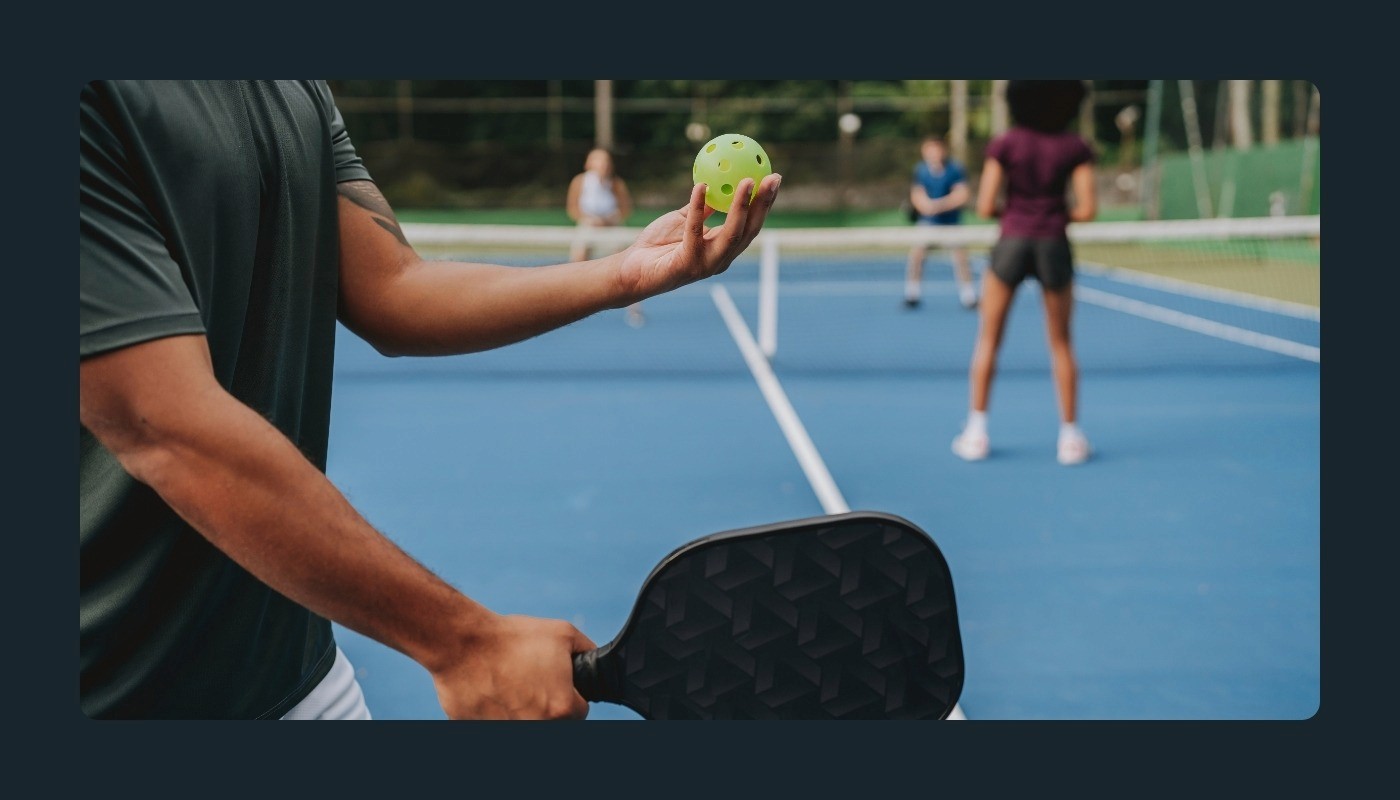
The release rules apply to both the volley serve and the drop serve, and the 2026 rulebook (Section 7.B) breaks them into three ideas:
Hand or paddle release. You can release the ball from your hand or let it drop off your paddle (Rule 7.B.1).
No manipulation or added spin. You cannot use your fingers or paddle to add spin to the ball during the release (Rule 7.B.2). Natural motion is fine, but intentionally spinning the ball is not.
Visible release. The receiver must be able to see you release the ball (Rule 7.B.3). If the receiver cannot see the release, they can call for a replay before returning the serve.
One common misunderstanding: the rules do not say the ball cannot move upward at all. An upward toss is allowed on a volley serve. What the rules prohibit is adding spin during the release.
For the drop serve, the ball must not be propelled in any direction (Rule 7.D.2). A natural drop from any height is legal, but you cannot throw it downward or push it.
Volley Serve Requirements in 2026
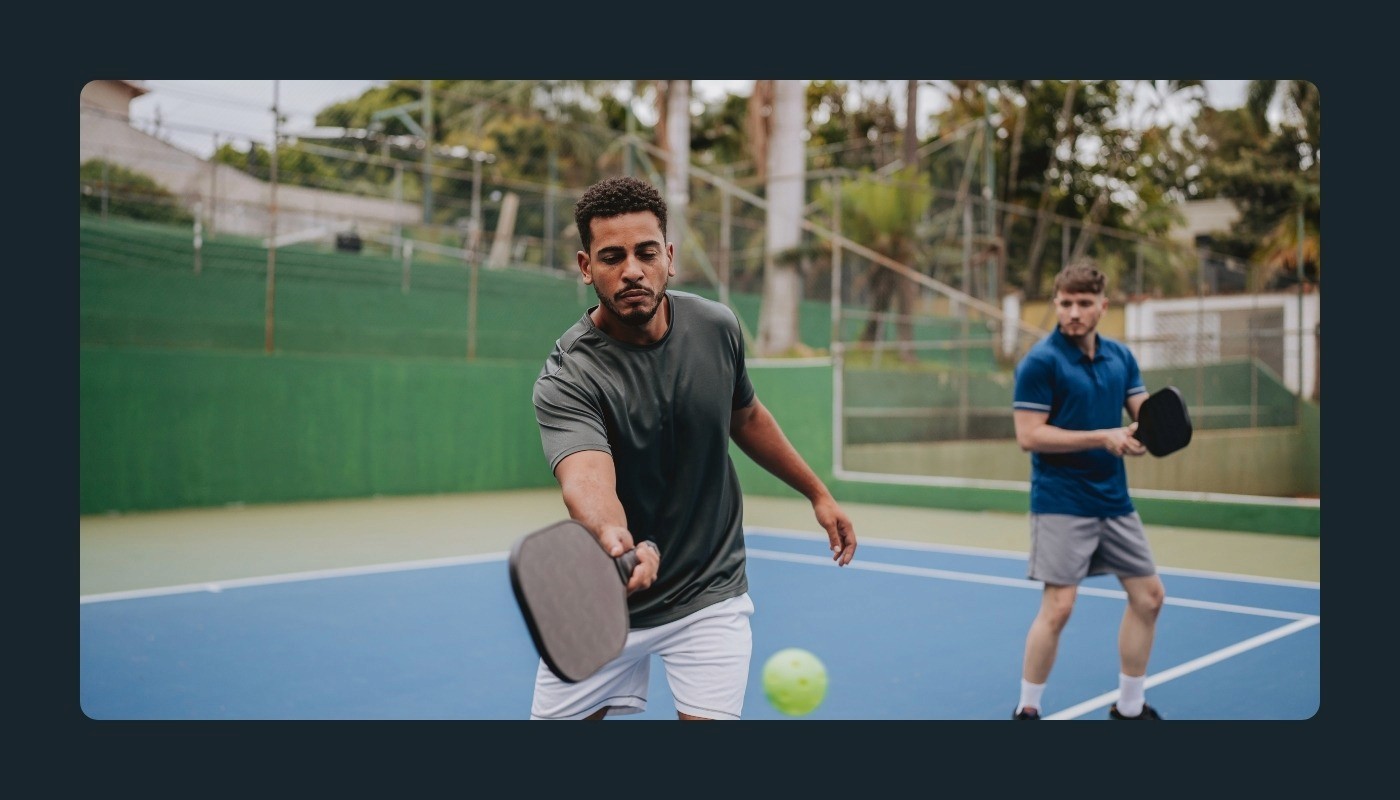
The volley serve carries three additional requirements that do not apply to the drop serve. For 2026, the rulebook added the word "clearly" to each requirement, giving referees more authority to call borderline serves as faults.
The Paddle Must Move in a Clear Upward Arc
At the moment you contact the ball, your paddle must be moving upward (Rule 7.C.1). A sidearm or downward chopping motion is not legal on a pickleball serve when hitting out of the air. Think low to high.
The Paddle Head Must Be Below the Wrist
At contact, the highest point of the paddle head must clearly be below the highest part of your wrist joint (Rule 7.C.2). A paddle head that sits level with or above the wrist at contact can be called a fault.
Contact Must Be Below the Waist
The ball must clearly be below the server's waist at the moment of contact (Rule 7.C.3). A contact point that creeps above the waist, even slightly, is grounds for a fault call.
A helpful mental cue for how to serve in pickleball with a legal volley serve: relax your arm, swing low to high, and keep the contact point out in front of your body and below your waist. Doing so will likely keep you within all three requirements.
Drop Serve Rules: What You Can and Cannot Do
The drop serve is simpler because the rulebook only governs the drop itself, not the swing. Here is what the 2026 rules say:
Drop from any height. You can raise your arm as high as you want before releasing the ball, as long as you do not propel it downward (Rule 7.D.1).
No added force. The ball must fall under gravity alone. No tossing, no throwing, no pushing (Rule 7.D.2).
Unlimited bounces. The ball can bounce as many times as you want before you hit it (Rule 7.D.3). There is no rule limiting you to one bounce.
Bounce anywhere. The ball does not have to bounce behind the baseline. A bounce inside the court is perfectly legal (Rule 7.D.4).
Forehand or backhand motion. The serve can be made with a forehand or backhand motion (Rule 7.D.5). Because the volley serve restrictions (upward arc, paddle head position, waist contact) do not apply to the drop serve, other swing motions like sidearm may also be used.
A higher drop generally produces a higher bounce, which may put the ball in a more comfortable contact zone for most players.
Where the Serve Must Land
After you hit the ball, the serve must land in the correct service court. The placement rules (Section 7.E) apply to both serve types:
The serve must go diagonally to the opposite service court.
The serve must clear the non-volley zone (the kitchen) and the kitchen line.
A serve that hits the net and still lands in the correct court is a live ball.
A serve that lands in the kitchen, on the kitchen line, or outside the correct court is a fault.
Common Serving Faults to Avoid
A fault on the serve costs you the rally immediately. Pickleball does not give you a second serve. One fault, and the serve moves on. Here are the most common mistakes:
Stepping on or inside the baseline before contact
Both feet leaving the ground at contact
Hitting the ball above the waist on a volley serve
Swinging downward on a volley serve
Propelling the ball downward on a drop serve
Serving into the kitchen or onto the kitchen line
Serving to the wrong service court
Adding spin to the ball during the release
Failing to call the score before serving
Reviewing your serving technique on video can help you spot faults you might not feel during a game. Even small adjustments, like dropping your contact point an inch lower, can make the difference between a legal serve and a fault.
What Changed in Pickleball Serve Rules for 2026
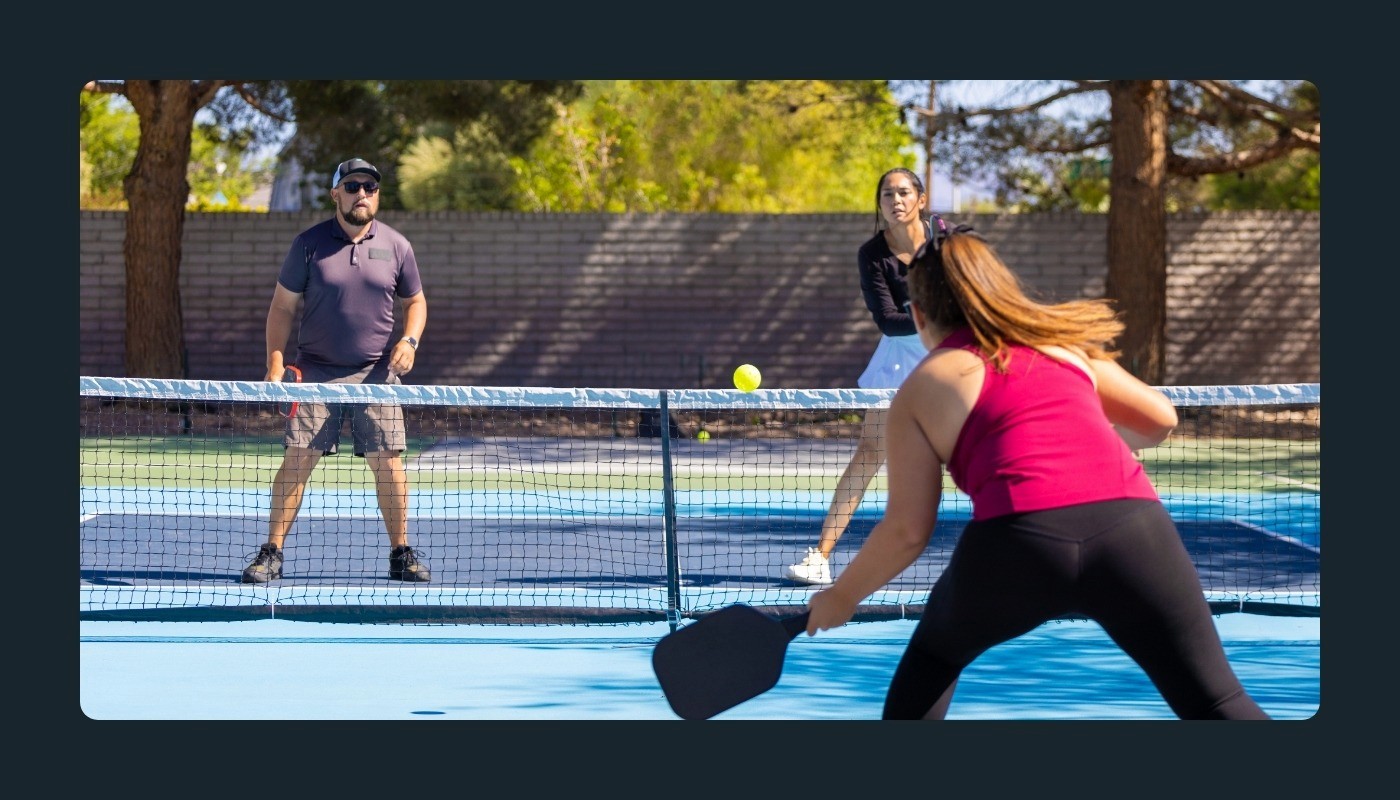
The core mechanics of the pickleball serve did not change for 2026. The volley serve and drop serve still work the same way. What did change is the language.
The biggest update is the addition of the word "clearly" to all three volley serve requirements. Under the 2026 service rules in pickleball, your paddle must move in a clear upward arc, the paddle head must clearly be below the wrist, and contact must clearly be below the waist. If a serve looks borderline, referees now have the authority to call it a fault rather than giving the benefit of the doubt.
For recreational play, the impact is minimal. But for tournament players or anyone with a borderline serve motion, cleaning up your technique now is a smart move. The 2026 rulebook also reorganized the serving rules into Section 7 (previously in Section 4), making them easier to find.
Scoring and the Service Sequence
Understanding serving in pickleball also means understanding when and from where you serve.
In doubles, the score is called as three numbers: the serving team's score, the receiving team's score, and the server number (1 or 2).
In singles, the score is two numbers: your score and your opponent's score. Serve from the right when your score is even, from the left when odd.
You must call the score before serving. The server has 10 seconds after calling the score to complete the serve.
Only the serving team can score under traditional side-out scoring. Rally scoring remains a provisional format for 2026 tournaments.
Conclusion
Pickleball serve rules come down to a handful of clear requirements: stand in the right spot, release the ball properly, swing correctly for your serve type, and land the ball in the correct court.
Knowing the rules is one thing. Seeing your own serve on video is what actually helps you fix problems. Spintip turns your phone into a full pickleball game-review studio with zero setup. Place your phone behind the baseline, tap Start, and go play. The app auto-calibrates for pickleball, records your session, and delivers a complete game review the moment you stop.
From there, VIEWPOINT lets you swipe through every point, including each serve, so you can spot whether your contact point crept above your waist or your paddle arc dipped sideways.
SAGE, the AI coach, is continuously improving and already delivers real-time tactical pop-ups during play, along with a post-game summary of areas to work on. And if you want a human eye on your technique,
ANALYZE lets you pick any point, record a voice question like "Is this serve motion legal?", and send the clip directly to a certified coach for feedback.
Download Spintip free on the App Store and see your serve from a whole new angle.
Can you hit a drop serve with any motion, including sidearm?
How many times can the ball bounce on a drop serve?
What happens if my serve hits the net and lands in the correct court?
Can you toss the ball upward on a volley serve?
Do you get a second serve in pickleball?


