Stefan Stefanov

Your grip is the only connection between your hand and the racket. If your grip is off, most of your shots will feel off, too. Most beginners grab the handle that feels comfortable and never think about it again. A wrong grip can limit your power, reduce your spin, and even contribute to wrist or elbow discomfort over time.
A good tennis racket grip sets you up for clean contact on forehands, backhands, volleys, and serves. So, how do you grip a tennis racket for different situations? Below is a simple walkthrough of every major grip and when to use each one.
Reading about grips and watching YouTube tutorials can point you in the right direction. But nothing replaces a certified coach who can watch your actual grip during real rallies and real mistakes. Your grip serves one purpose, i.e., controlling the ball to a target so you can win the point. A coach who sees your game in action can spot whether your grip is helping or hurting that goal far faster than any article can.
Spintip gives you that coach connection. Record your match with one tap, get an instant game review with a performance number for every point, and send any clip to a PTR-certified coach for personalized feedback on your grip and technique.
Download Spintip for free and start connecting your practice to real coaching.
Understanding the Bevel System
Before jumping into specific grips, you need to understand the handle of your racket. A tennis racket handle is shaped like an octagon with eight flat sides. Each side is called a "bevel," numbered 1 through 8. The USTA considers the continental grip, which sits on bevel 2, one of the most important grips to develop early because it applies to so many different shots.
For right-handed players, hold the racket with the strings facing sideways. The top flat side is bevelled 1. Count clockwise from there (when looking at the butt cap) through bevel 8. For left-handed players, the numbering mirrors in the opposite direction, so when a grip calls for bevel 2, a lefty would use bevel 8 instead.
Every grip is defined by where two parts of your hand sit on those bevels: the base knuckle of your index finger and the heel pad of your palm. Shifting these reference points from one bevel to another creates each grip.
The Continental Grip
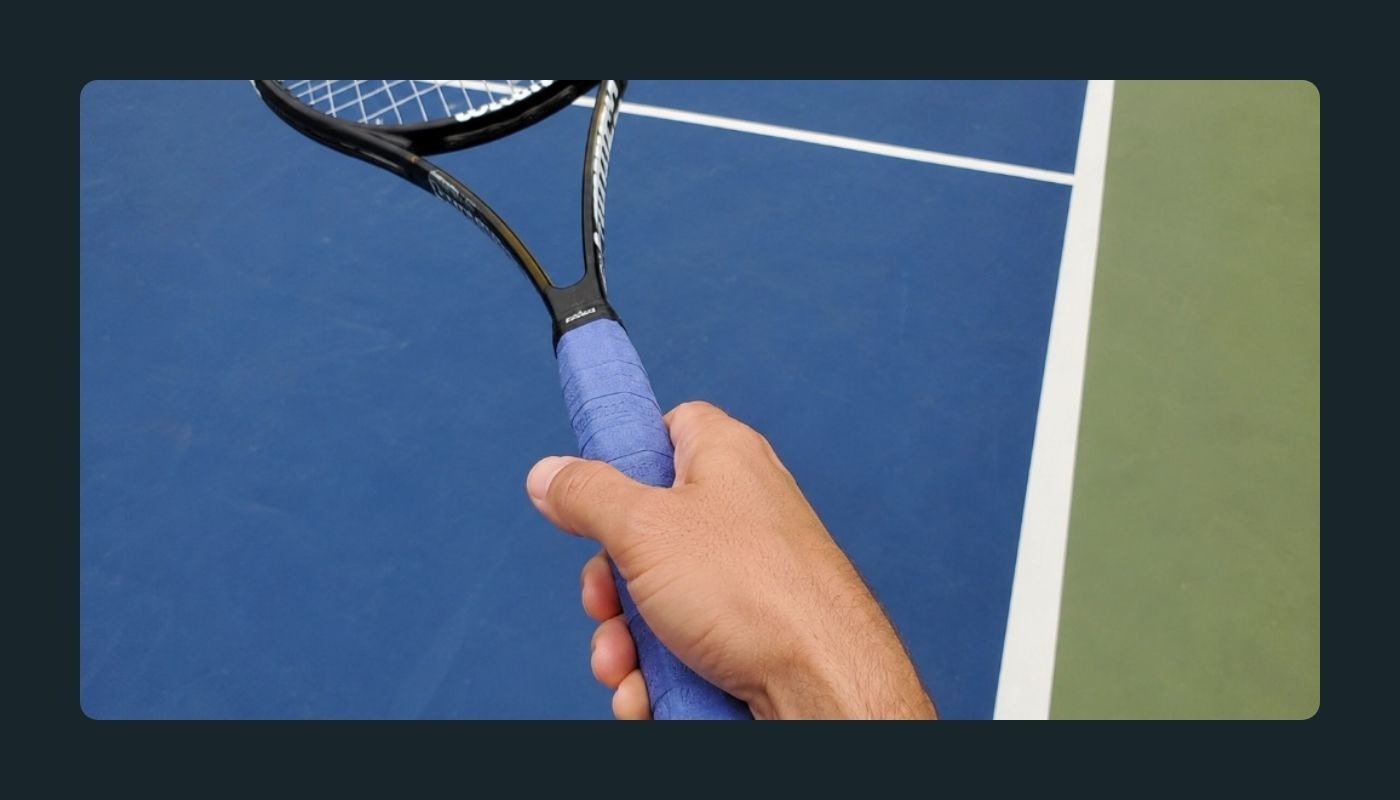
The continental grip is often considered the most versatile grip in tennis, and every player should know how to hold the racket in this position. Some coaches call it the "hammer grip" because the motion is similar to holding a hammer.
How to Find It
Place the base knuckle of your index finger on bevel 2. A simple trick: hold the racket by its throat with your non-dominant hand, then place your dominant hand on the handle as if you were hammering a nail. The V shape between your thumb and index finger should point toward the top-left edge of the handle.
When to Use It
Serves (flat, slice, and kick)
Volleys (both forehand and backhand)
Overheads and smashes
Slice shots and drop shots
The continental grip keeps the racket face neutral, which makes it ideal for shots that need quick adjustments. You do not have to change grips between a forehand volley and a backhand volley, so net play becomes simpler. On the downside, generating heavy topspin on groundstrokes can feel awkward with this grip, which is why most players switch grips for baseline rallies.
Reading about bevels and grips is a good start, but nothing beats a certified coach putting their hands over yours and adjusting your grip in real time based on the shot you're actually hitting. A grip only matters because of what it does to the ball at contact, not as an abstract position on the handle. Spintip gives you that live coaching connection, plus the best camera app for tracking how your grip changes affect your ability to send and receive the ball consistently. Download Spintip and connect with a coach, then dive back into the grip guide with a much clearer picture.
The Eastern Forehand Grip
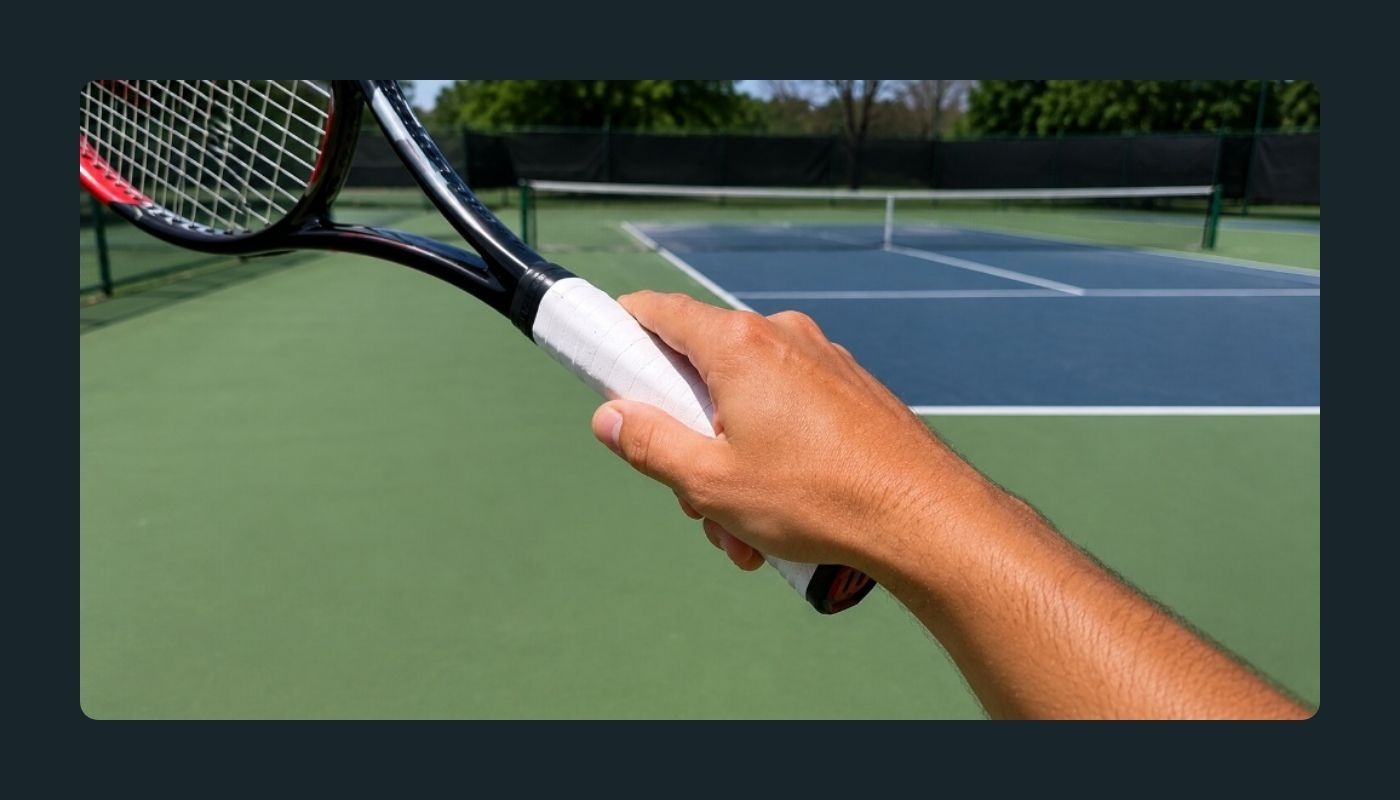
The eastern forehand grip is one of the easiest grips for beginners to pick up. Many coaches describe it as "shaking hands with the racket," and that image is a good way to remember how to hold a tennis racket for your first forehand.
How to Find It
Place the base knuckle of your index finger on bevel 3. Another easy way: lay your dominant palm flat against the strings, then slide your hand straight down to the handle. Your hand should naturally settle into an eastern forehand position.
When to Use It
The eastern grip tends to produce a flatter, more driven ball. Attacking players who like to step inside the baseline and hit through the court may prefer this grip. Switching from an eastern forehand to a continental grip requires only a small rotation of the hand, making transitions to the net smoother.
The eastern grip can make it harder to generate extreme topspin compared to grips further around the handle, and high-bouncing balls above shoulder height may also feel less comfortable.
The Semi-Western Forehand Grip
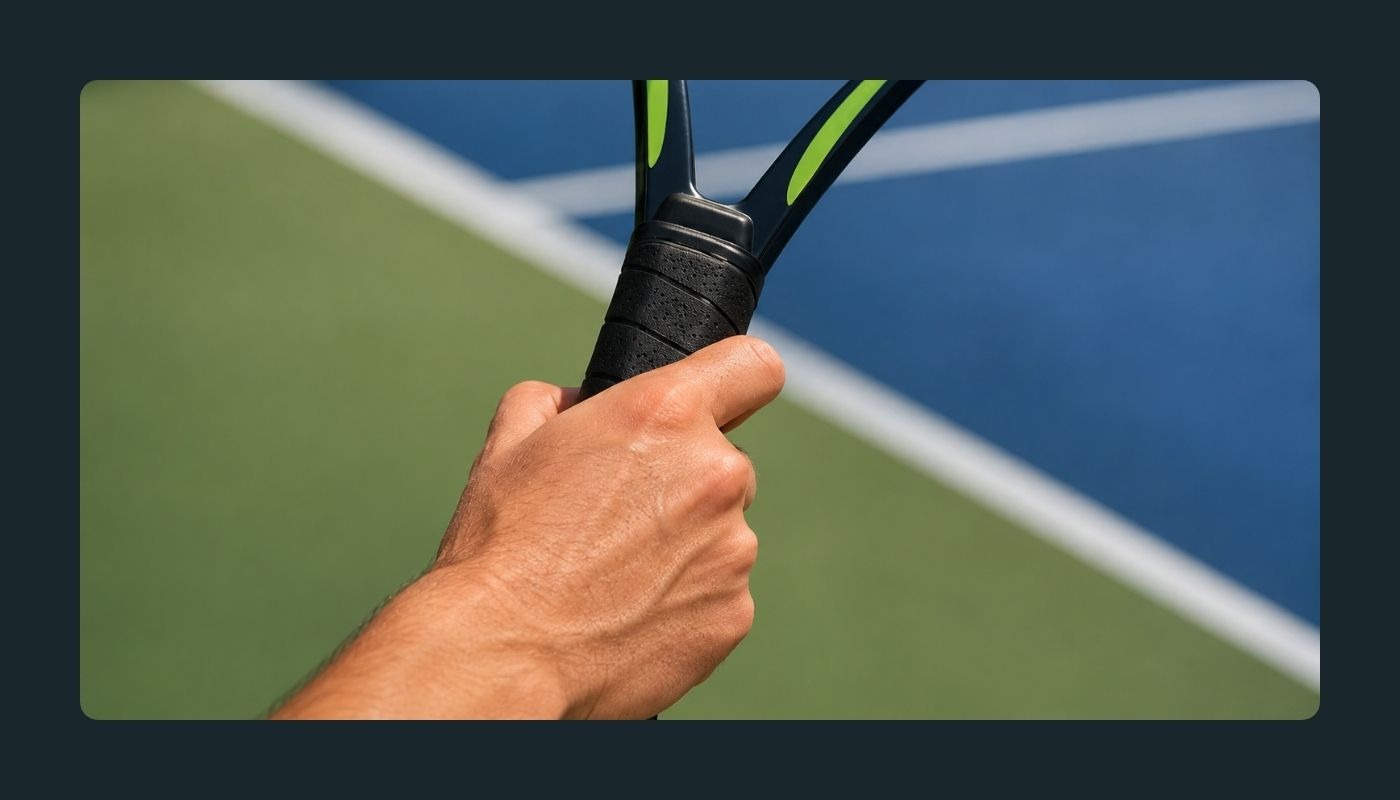
The semi-western is widely considered the most popular forehand grip in modern tennis. Most players on the professional tour today use a grip in or near this range. If you are looking for a balance between topspin and power, the semi-western is a strong starting point.
How to Find It
Place the base knuckle of your index finger on bevel 4. A quick method: set your racket flat on a table or the ground, then pick it up by the handle. Your hand will land close to a semi-western position.
When to Use It
The semi-western grip naturally closes the racket face slightly, encouraging a low-to-high swing path. That swing path adds topspin to your shots, helping the ball clear the net with a bigger margin of error.
A few things the semi-western grip does well:
Handles balls at waist to shoulder height
Generates good topspin while still allowing you to flatten out shots when needed
Works on all court surfaces
The tradeoff is that very low balls can be trickier to pick up cleanly, and the grip change to continental for net play is larger than with an eastern grip.
The Western Forehand Grip
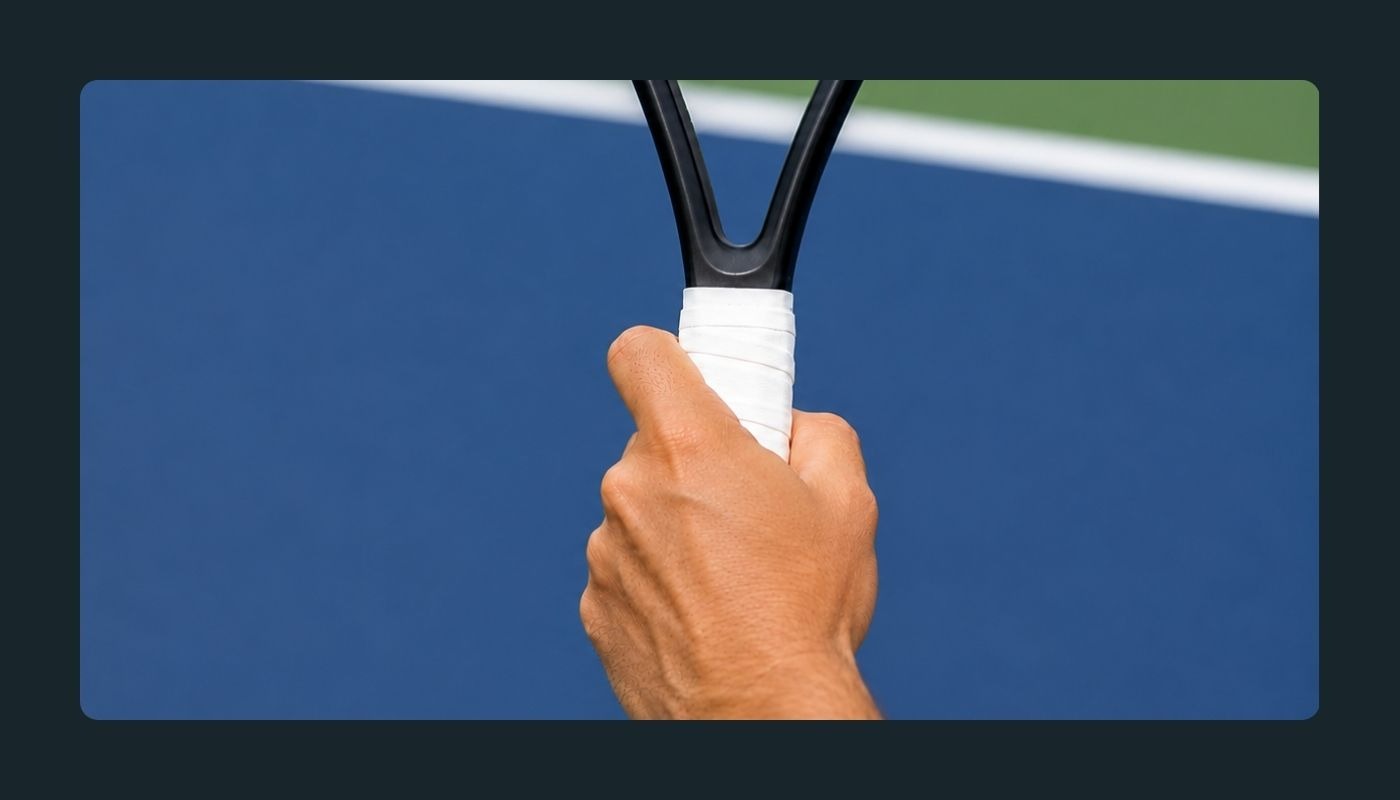
The western grip is one of the most extreme forehand options in common use. Players who favor heavy topspin, particularly on slow clay courts, sometimes gravitate toward a western grip.
How to Find It
Place the base knuckle of your index finger on bevel 5. An alternative method: hold the racket face pointing at the ground, make a fist-pump motion with your dominant hand, and grab the handle from that position.
When to Use It
The western grip produces significant topspin, which can help push opponents behind the baseline. However, there are real drawbacks. Low balls near the ground can be difficult to handle, flattening out a shot becomes harder, and the grip change required to get back to a continental grip is the largest of any forehand grip. Because of these limitations, the western grip may not suit players who come to the net frequently.
Backhand Grips

The backhand side has its own set of grip options. Here is a quick overview of the two most common approaches.
One-Handed Backhand (Eastern Backhand Grip)
Place the base knuckle of your index finger on bevel 1. The racket face stays relatively neutral, producing a mix of flat and topspin shots. The one-handed backhand offers excellent reach on wide balls, and transitioning back to a continental grip for net play is smooth.
Two-Handed Backhand
Your dominant hand takes a continental or eastern backhand grip, while your non-dominant hand goes on top using an eastern or semi-western forehand grip. Both hands should sit together on the handle with no gap between them. A two-handed backhand provides extra stability, especially for players still building upper-body strength, but it does limit your reach compared to a one-hander.
Quick-Reference Grip Summary
Here is a simple overview of which bevel and shot each grip covers.
Grip Bevel (Right-Handed) Best Used For | ||
|---|---|---|
Continental | 2 | Serves, volleys, overheads, slices |
Eastern Forehand | 3 | Flat forehands, all-court play |
Semi-Western Forehand | 4 | Topspin forehands, baseline rallies |
Western Forehand | 5 | Heavy topspin, high-bouncing balls |
Eastern Backhand | 1 | One-handed backhand |
Two-Handed Backhand | Dominant hand: 1 or 2, non-dominant: 3 or 4 | Stable backhand with both hands |
Common Grip Mistakes to Avoid
A few common errors can undo your efforts on the grip front. Watch out for these:
Gripping too tightly. Tension in your wrist and forearm can slow down racket head speed and may contribute to discomfort over time. Aim for a firm but relaxed hold.
Never changing grips. Using one grip for everything can limit your shots. Practice switching between grips until it becomes automatic.
Choking up too far or holding too low. Your hand should sit near the bottom of the handle, with the butt cap close to the heel of your palm.
How to Practice Switching Grips
Grip changes need to happen quickly and without looking at your hand. A few ways to build that habit:
Between rallies, rotate the racket in your hand from a continental grip to an eastern or semi-western grip and back again.
Use your non-dominant hand on the throat of the racket to help guide the rotation.
Shadow swing at home without a ball, going through a forehand motion and then immediately rotating to a continental grip as if moving to the net.
With enough repetition, grip changes will happen on autopilot. Recording yourself during practice and reviewing the footage afterward can also help. Watching in slow motion lets you see whether your hand is landing on the correct bevel at contact and whether the racket face is angled the way you intended.
Conclusion
Knowing how to grip a tennis racket correctly can make a noticeable difference in your control, spin, and comfort on the court. Matching the right grip to the right shot is one of the simplest ways to play better tennis. The challenge is that grip issues are hard to feel in the moment but easy to spot on video.
Spintip is built for exactly that kind of self-review. Place your phone behind the baseline, tap Start, and go play. The app's AI auto-calibrates the court and records your entire session with zero additional setup, so you can focus on your grip changes instead of fiddling with your camera.
Once you stop, your game review is ready instantly, with no uploads and no waiting. VIEWPOINT lets you swipe through every point and review at variable speed, so you can slow down contact and see exactly how your racket face angle looked on each shot. Swipe up on the points where your new grip felt right, swipe down on the ones that did not, and you have a curated reel of what worked.
PULSE gives you a live performance number that updates point by point. When you switch from an eastern grip to a semi-western, for example, you can track whether your level trends up or down over multiple sessions. SAGE, the AI coach, delivers tactical pop-ups between points during play. Prompts like "add topspin" or "recover to center" can signal when your grip choice may need adjusting. SAGE is still evolving, but getting feedback seconds after a mistake can be genuinely useful.
If you want a human eye on your technique, pick any point in your game review, record a voice question like "Is my grip too flat here?", and send it directly to a PTR-certified coach on the platform. The coach responds with video or voice feedback, auto-transcribed and embedded right into your clip. No scheduling, no court time needed.
Download Spintip for free and start seeing what your grip actually looks like on court.
What is the best tennis racket grip for beginners?
How tightly should I hold the racket?
Can I use the same grip for every shot?
How do I know if my grip is causing problems?
What grip do most professional players use for the forehand?


