Stefan Stefanov

Every shot you hit in pickleball falls on one of two sides: the forehand or the backhand. Knowing when to choose one over the other can make your game more consistent and your decision-making faster on the court.
A forehand is hit from your dominant side with your palm facing the net. A backhand is hit from your non-dominant side with the back of your hand facing the net. According to USA Pickleball, every shot in the game, from dinks to drives to volleys, is either a forehand or a backhand. The forehand tends to generate more power, while a reliable backhand is essential for full court coverage.
Most players naturally favor one side. A player who constantly runs around their backhand to hit a forehand, for example, opens up court space for an opponent to exploit.
Here is a clear breakdown of how each shot works, when to reach for one over the other, and how to avoid the most common mistakes recreational players make.
Reading about forehand and backhand technique has real value. But nothing replaces a certified coach who can watch your actual game and point out what needs to change on real shots under real pressure. Technique only matters when it helps you control the ball to a target and win points.
Spintip gives you that coach connection. Record your session with one tap, review each point, and send any forehand or backhand directly to a certified coach for feedback on what went wrong and how to fix it. The app tracks your performance point by point, so you can see whether your level drops when you are forced onto your weaker side. Spintip is the best camera app for tennis and pickleball for players who want to improve both sides of their game.
What a Forehand Looks Like in Pickleball
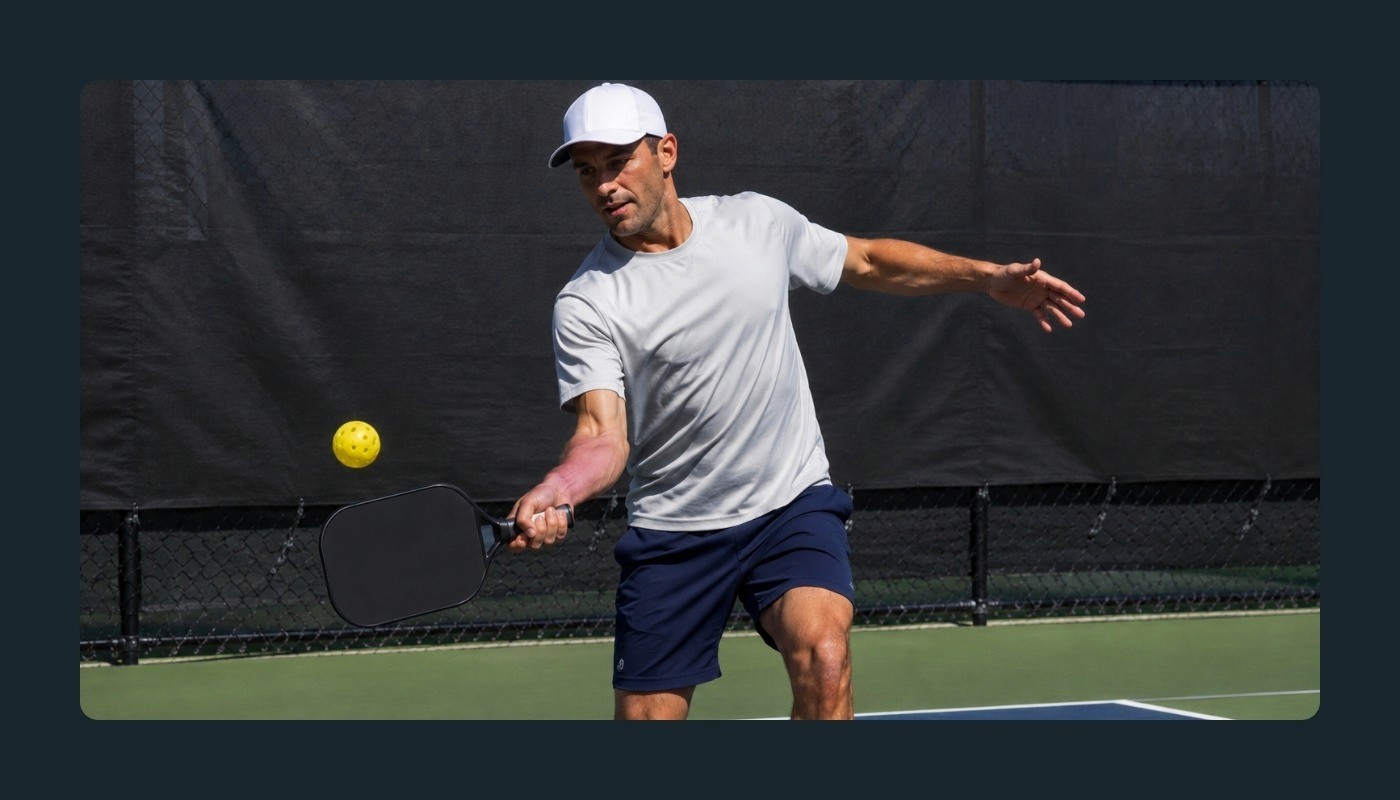
A pickleball forehand is any shot hit from your dominant side, where your palm faces toward the net at the moment of contact. For a right-handed player, that means hitting the ball on the right side of your body. For a left-handed player, the forehand sits on the left side.
Why Most Players Prefer the Forehand
The forehand tends to feel more natural for most people. Your chest and shoulder muscles support the motion, which is why many players find they can generate more power on this side. The forehand often becomes the go-to shot early on.
Some players call this their "front hand" side because the palm leads the paddle face forward.
Grip and Stance for the Forehand
A continental grip (sometimes called the "hammer" grip) works well for most recreational players because you can hit both sides without switching mid-rally. Place the V shape formed by your thumb and index finger on top of the paddle handle, similar to how you would hold a hammer.
For your stance, keep your feet roughly shoulder-width apart with knees slightly bent and your weight on the balls of your feet. Step into the shot with your front foot to generate forward momentum. The swing starts low, moves through the ball at contact, and finishes with a short follow-through toward your target.
What a Backhand Looks Like in Pickleball
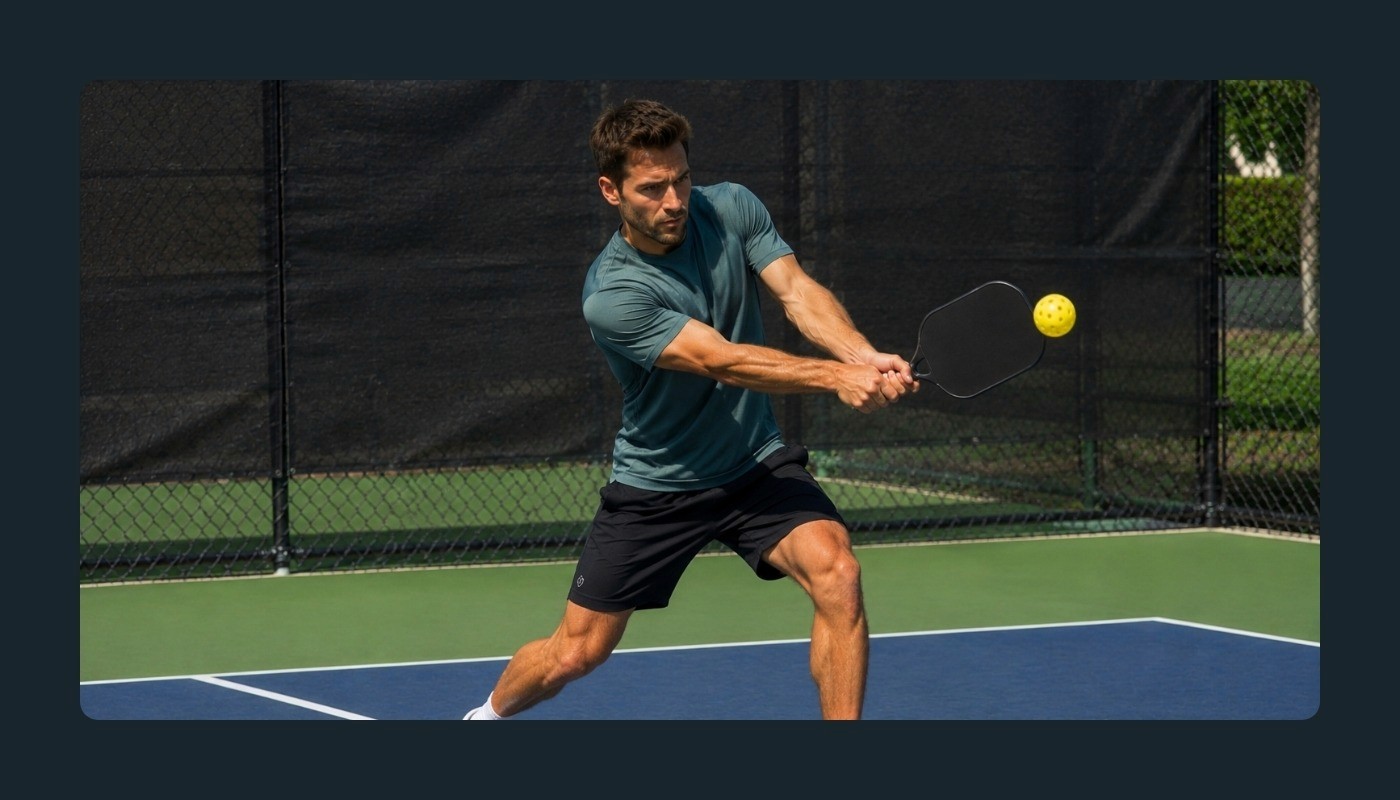
A backhand in pickleball is hit from your non-dominant side, with the back of your paddle hand facing the net at contact. Right-handed players hit backhands on the left side of their body, and left-handed players hit them on the right.
One-Handed vs. Two-Handed Backhand
You have two main options for backhand technique. A one-handed backhand gives you more reach and faster transitions between shots. A two-handed backhand offers more stability and may help generate topspin, especially on drives from the baseline. Many competitive players switch between the two depending on the situation.
Grip and Stance for the Backhand
The continental grip serves double duty here. You do not need to change your grip when switching sides, which saves valuable time during fast exchanges. For your stance, turn your shoulders so your paddle-side shoulder points toward the net, keep the paddle out in front, and contact the ball slightly farther in front of you than you would on a forehand.
The shoulder turn is one of the most important parts of a solid backhand. Without that rotation, most players end up using just their arm, which reduces both power and accuracy.
When to Use Your Forehand
Knowing your forehand is typically your stronger side helps you make smarter choices during a rally, but you should not force it into every situation.
Return of Serve
The forehand return of serve is often a strong choice because you have time to position yourself. Since the ball must bounce before you return a serve (per USA Pickleball rules), you can set your feet and use the natural power of your dominant side to send a deep return.
Drives and Passing Shots
When you need to drive aggressively from the baseline, the forehand drive often provides more power. The open stance allows for hip rotation and weight transfer, which translates into pace on the ball.
Middle Balls in Doubles
In doubles play, the player on the left side of the court (for two right-handed players) typically takes middle balls with their forehand. A forehand from the center is a more natural and controlled shot than a backhand from the same position.
When to Use Your Backhand
Many recreational players avoid their backhand pickleball side whenever possible. Running around it to hit a forehand might work occasionally, but doing so consistently creates problems.
Dinks at the Kitchen Line
Backhand dinks are extremely common in competitive play. When you are at the non-volley zone (kitchen) line, and the ball comes to your non-dominant side, a compact backhand dink often gives you better control than trying to re-position for a forehand. A backhand slice dink can also slow down the rally and give you time to reset.
Volley Battles
During fast hands exchanges at the net, you will not always have time to move into a forehand position. A quick backhand volley can cover your non-dominant side without leaving the middle open.
Defending Your Body
Balls hit directly at your body, especially at your non-dominant hip, are easier to handle with a backhand. Trying to twist into a forehand on a body shot often leads to a jammed swing.
Common Mistakes Players Make
A few habits tend to show up at every skill level. Catching them early makes a real difference in how quickly your game improves.
Running Around Every Backhand
Consistently avoiding the backhand creates a cycle: the less you use the shot, the weaker the shot feels, and the more you avoid practicing. Opponents notice this habit quickly and will start targeting your backhand to pull you out of position.
Using the Wrong Grip
Some players grip the paddle too tightly or use a forehand-dominant grip that makes backhand shots awkward. A continental grip allows you to hit both sides without adjustment, and a relaxed hold gives you better touch.
Late Paddle Preparation
Waiting too long to prepare your paddle is one of the most frequent errors. Getting your paddle back early, with a shoulder turn on the backhand side, gives you more time to make clean contact out in front of your body.
Swinging Too Hard
Power often comes from body rotation and weight transfer, not from arm strength alone. Swinging harder typically leads to less control. Focus on smooth, compact swings and let your body mechanics do the work.
How to Practice Both Sides
Drilling both sides equally builds the muscle memory you need when the pace picks up during a real game.
Crosscourt dink rally: Stand at the kitchen line with a partner and alternate forehand and backhand dinks crosscourt. Focus on placement, not power.
Wall drills: Hit against a wall, alternating sides. A wall gives you consistent reps without needing a partner.
Targeted feeds: Have a partner feed balls alternately to each side. Return each ball with the correct side without running around the shot.
Recording your practice sessions can also help. Watching footage of your own form often reveals habits you cannot feel in the moment, like a late shoulder turn or a high paddle takeaway.
Conclusion
Both the forehand and backhand play essential roles in a well-rounded pickleball game. Choosing the right shot for each situation can improve your consistency, court coverage, and decision-making during fast rallies.
Spintip can help you see your shot selection more clearly. Place your phone behind the baseline, press start, and go play. The app auto-calibrates the court and records your session with zero additional setup. After you finish, use
VIEWPOINT to review your game point by point, with each point tagged as a highlight, lowlight, or neutral. Swipe up on any point to save it as a clip for closer review.
PULSE gives you a live performance number for each point, so you can track whether your level dips when you are forced onto your weaker side.
SAGE, the continuously improving AI coach, delivers a post-game summary with action items targeting your weaknesses. If your backhand consistency is a pattern, SAGE can flag it. For deeper feedback, pick any point where your technique broke down, record a voice question through ANALYZE, and send it to a certified coach. Your question gets inscribed as a subtitle in the clip so the coach sees exactly what you are asking about.
Which side is stronger for most pickleball players?
Can you use the same grip for forehand and backhand?
Should I always run around my backhand?
What is the best backhand for beginners?
How do I know when to use forehand vs backhand during a rally?


