Stefan Stefanov

The kitchen may cause more confusion and more lost points than any other area on a pickleball court. Most players pick up the basics quickly, but the edge cases trip up beginners and experienced players alike.
So, what is the kitchen in pickleball? The kitchen is simply the nickname for the non-volley zone (NVZ), a 7-foot area on each side of the net where volleying is not allowed. Here is everything you need to know, based on the USA Pickleball Official Rulebook.
Where Is the Kitchen on a Pickleball Court?
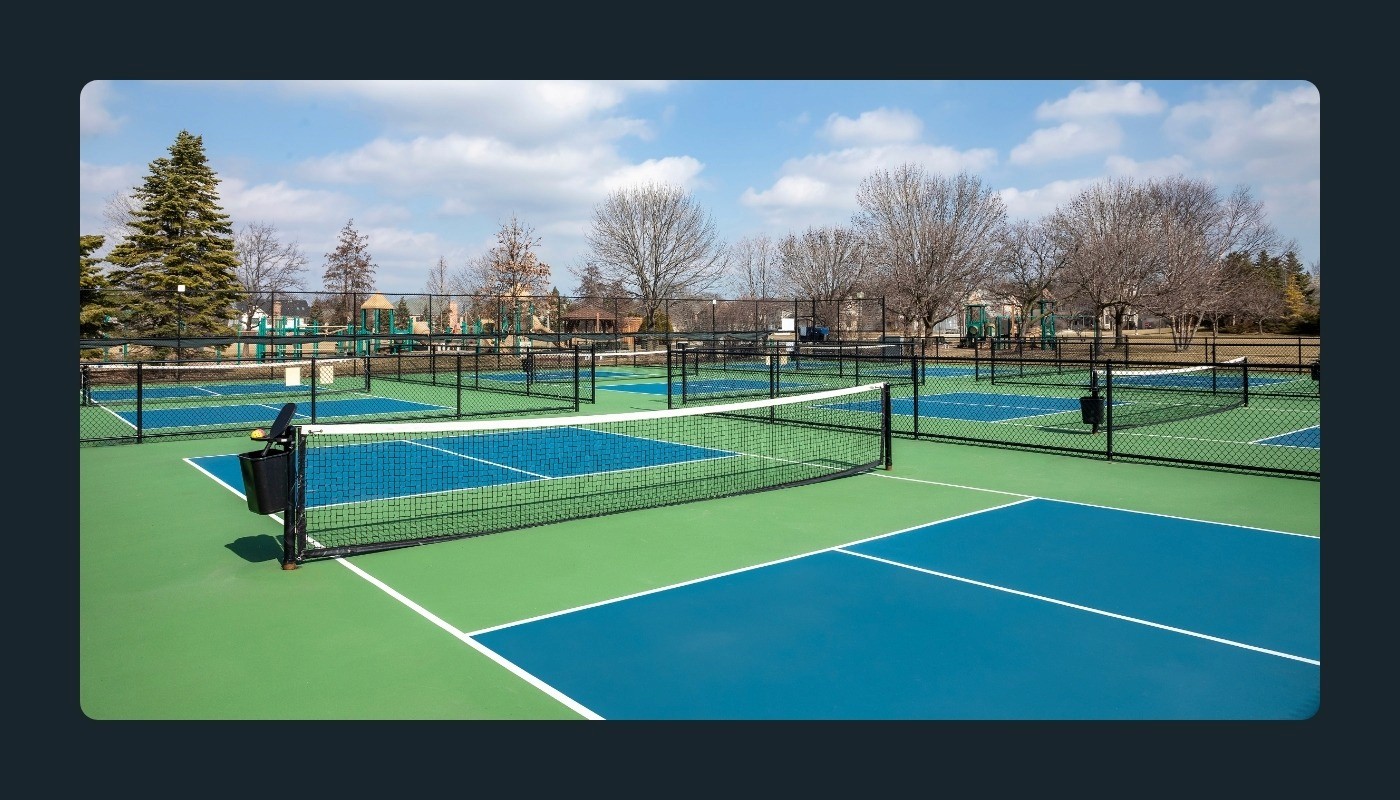
A standard pickleball court measures 20 feet wide and 44 feet long. The kitchen sits in front of the net and spans the full 20-foot width on each side.
Kitchen Dimensions
Here are the non-volley zone pickleball measurements every player should know:
7 feet deep from the net on each side (14 feet total when you count both sides)
20 feet wide, running from sideline to sideline
Bounded by the NVZ line, which sits parallel to the net
The NVZ line itself is part of the kitchen. Touching that line while volleying counts the same as standing fully inside the zone. More on that below.
Reading about pickleball kitchen rules is a great first step, but nothing replaces a certified coach who can watch your real game. A coach reviewing your actual net play can spot the momentum faults, the line steps, and the positioning habits that a blog can only describe. Spintip gives you that coach connection, plus on-device performance insights that track how you play point by point.
Download Spintip for free and connect with a certified coach today.
Why the Kitchen Exists
Pickleball was designed to be a game of rallies, strategy, and soft-touch shots.
Without the kitchen rule, a player could camp at the net and hit unreturnable shots all day. The non-volley zone forces players to use dinks, drop shots, and patience rather than pure power. The pickleball kitchen is one of the features that makes the sport accessible for all ages and skill levels.
Rule 1: No Volleying in the Kitchen
A volley means hitting the ball out of the air before it bounces. The core pickleball kitchen rules are simple: you cannot volley the ball while any part of your body is touching the kitchen or the kitchen line.
What Counts as "Touching"
A fault happens when you volley the ball while:
Both feet are inside the kitchen
One foot is on the NVZ line
Even one toe is grazing the edge of the line
According to the USA Pickleball Official Rules Summary, "It is a fault if, when volleying a ball, the player steps on the non-volley zone, including the line..."
Position yourself a couple of inches behind the kitchen line during net play. Over time, your body can develop the spatial awareness to know where you stand without looking down.
Rule 2: Momentum Into the Kitchen Is a Fault
Here is where most players get caught off guard. You can make clean contact well behind the kitchen line, but if your forward momentum carries you into the kitchen afterward, it counts as a fault.
How the Momentum Rule Works
The USA Pickleball rules state that "it is a fault if, after volleying, a player is carried by momentum into or touches the non-volley zone, even if the volleyed ball is declared dead before this happens."
Here are a few scenarios to make pickleball rules kitchen momentum clearer:
You volley from behind the line and stumble forward into the kitchen. Fault.
You smash an overhead, land behind the line, but drift forward on your follow-through. Fault.
You volley cleanly, stay balanced, and walk into the kitchen three seconds later to pick up a ball. No fault, because the movement is unrelated to the shot.
Reading the rulebook and watching kitchen-fault videos on YouTube helps, but nothing beats a certified coach watching you play live and catching the exact moment your momentum carries you into the non-volley zone. Knowing the rules in isolation doesn't help if you can't feel where your feet are during a fast exchange. Spintip connects you to a real coach and works as a performance camera app that flags how you're moving in and out of the kitchen while you send and receive shots. Download Spintip, connect with a coach, and go back to mastering every kitchen rule with someone watching your feet, not just your reading.
How to Avoid Momentum Faults
Staying balanced may be the most important factor. Plant your weight on your back foot before you swing, step backward after contact if you feel yourself drifting, or skip the shot if you cannot control your forward motion.
A recorded match review of your net play can reveal which shots pull you forward, so you can adjust your positioning over time.
Rule 3: You Can Stand in the Kitchen
A common misconception is that the kitchen is off-limits. You are allowed to stand in the kitchen for any reason, as long as you are not volleying.
Legal Actions Inside the Kitchen
You can legally enter the kitchen to:
Hit a ball that has already bounced inside the NVZ
Retrieve a short dink that lands near the net
Stand and watch the rally play out
The USA Pickleball rules confirm that "a player may legally be in the non-volley zone any time other than when volleying a ball."
You can also step into the kitchen before a short ball bounces, as long as you let the ball bounce before making contact. Volleying from that position would be a fault.
Why Standing in the Kitchen Hurts Your Game
Strategically, you want to exit the kitchen quickly after hitting a bounced ball. A player standing in the NVZ becomes an easy target because they cannot volley back.
Watching your own point-by-point game footage can highlight how often you linger in the kitchen and what it costs you during rallies.
Rule 4: The Kitchen Line Belongs to the Kitchen
Unlike other lines on the court, the NVZ line is part of the kitchen. A ball that lands on the baseline or sideline during a rally counts as "in." The kitchen line follows a different rule.
How the NVZ Line Differs
A ball landing on any court line during a rally is good.
A serve that lands on the NVZ line is a fault for the server.
Your foot touching the NVZ line while volleying is a fault.
The USA Pickleball rules are clear on serves: "A serve contacting the non-volley zone line is short and a fault."
Rule 5: Your Gear Counts Too
Anything attached to you or carried by you is subject to the same kitchen rules as your body.
Items That Can Trigger a Fault
The non-volley zone pickleball rule covers everything on your person:
Hats, visors, and sunglasses
Wristbands or sweatbands
A phone falling out of a pocket
Your paddle is touching the kitchen surface
The USA Pickleball rules define a fault when "anything they are wearing or carrying" touches the non-volley zone during or after a volley. Make sure your gear is secure before stepping up to the line.
Rule 6: The Plane of the Net
Your paddle and body cannot cross the plane of the net before you make contact with the ball. After you strike the ball, your follow-through may cross the net, as long as you do not touch the net, the net posts, or your opponent's court.
The "Ball Spins Back" Exception
One rare scenario allows you to legally reach across the net before contact. If the ball bounces on your side and then spins or blows back over the net, you may cross the plane to play it. Crossing the plane before striking the ball is otherwise a fault. The kitchen rule still applies, so you cannot touch the NVZ while volleying.
Rule 7: Servers Must Clear the Kitchen
A legal serve must land in the diagonal service box on the opposite side and completely clear the kitchen and the NVZ line. A serve that clips the NVZ line is a fault. Since pickleball allows only one serve attempt per server, a kitchen-line serve means an immediate loss of serve.
Hand Signals and Stacking Near the Kitchen
While hand signals and stacking aren't kitchen rules themselves, they directly affect how cleanly your team defends the non-volley zone — and it's one of the fastest-rising questions players are asking this season. Stacking is a doubles positioning strategy where both partners line up on the same side of the court before the serve or return, then move into standard formation once the ball is in play. Teams stack to keep a stronger kitchen defender consistently on their preferred side, rather than being locked into whichever side the serve rotation happens to put them on. Hand signals let the player at the kitchen line silently tell their partner what shot to expect or where to move, without tipping off the opponents. A common example: one or two fingers held behind the back before the serve, indicating whether the server plans to stay back or move in which tells the partner whether to adjust their own position near the kitchen line. Getting stacking and signals right matters most in the seconds right before a rally starts, when kitchen positioning is decided, a team out of position at that moment is the team giving up easy put-aways.
Conclusion
The pickleball kitchen rules come down to a handful of clear ideas. No volleying in the NVZ. The line is part of the zone. Your momentum counts as part of the shot. And anything on your body follows the same rules as your feet.
Once you lock in these basics, the kitchen shifts from a source of confusion to a strategic tool you can use to control points.
One of the fastest ways to improve your kitchen positioning is to actually watch yourself play. Spintip is a free AI-powered video analysis app for pickleball that delivers a complete game review the moment you stop playing.
VIEWPOINT lets you swipe through every point, each tagged with your performance level and win/loss resolution, so you can spot exactly where a kitchen fault cost you the rally.
PULSE tracks your real-time performance score point by point, making improvement visible over weeks. And if a specific fault keeps repeating.
CONNECT lets you send that exact point to a certified coach for feedback. No cloud uploads, no waiting. Place your phone behind the baseline, tap start, and go play.
Download Spintip free and get your first game review at spintip.com.
Can you stand in the kitchen at any time during a pickleball game?
What happens if your momentum takes you into the kitchen after a volley?
Does the kitchen line count as part of the non-volley zone?
Can your paddle cross the plane of the net?
What items can cause a kitchen fault besides your feet?


